Reviewed · TOURS
Birding Costa del Sol Day tour
Big birds, quiet bays, and real habitat variety. This Costa del Sol birding outing is built as a full day circuit from Málaga into wetlands, coastal cliffs, and mountain edges, so you get more than one kind of birding in a single outing. You also have a pickup option and an English-speaking guide, which keeps the day smooth from the start.
I especially like how the route mixes coast, wetlands, and upland views. Stop 2 at the Guadalhorce Estuary is given extra time, and that matters, because waterfowl and waders often need longer scans than you expect.
One possible drawback is the weather factor. The tour requires good conditions, and since it runs for about 8 hours, you will be outside and moving for most of the day.
In This Review
- Quick hits before you go
- Why This Costa del Sol Birding Day Works So Well
- Price and What You Really Get for Up to Four
- The Route in Plain English, Plus How to Prepare
- Stop 1 Punta de Calaburras and the Calaburras Lighthouse: Coastal Birding Momentum
- Stop 2 Playa Guadalhorce and the Guadalhorce Estuary: Where the Bird Day Really Starts
- Stop 3 Rio Grande: Riparian Birds in a Narrow, Productive Window
- Stop 4 Mirador de Juanar: White Limestone Views and Timing for Raptors
- Stop 5 Sierra de Las Nieves National Park Edge: Reservoir and Stream Birding
- How the Guide Helps You See More: Florent’s Bird Plus Nature Approach
- Value for Different Birders: What You’ll Enjoy Most
- Best Time to Go, Based on the Habitats Here
- Should You Book This Birding Costa del Sol Day Tour?
- FAQ
- How long is the Birding Costa del Sol day tour?
- How much does the tour cost?
- Is pickup offered?
- Where does the tour start?
- Is the tour offered in English?
- Is this a private tour?
- What stops are included on the route?
- What if the weather is bad?
- Can I cancel for a full refund?
Quick hits before you go
- Private group of up to 4: less crowding around scopes and more time for your questions.
- Habitat hopping in one day: marine/coastal areas, an estuary, river habitat, then mountain and national park edges.
- Guadalhorce Estuary gets 2.5 hours: prime time for waterfowl and waders, with big species days possible.
- Mirador de Juanar timing for raptors: the day includes the kind of vantage point birding depends on.
- A guide who reads the whole ecosystem: Florent’s approach connects birds with insects and plants, not just checklists.
Why This Costa del Sol Birding Day Works So Well
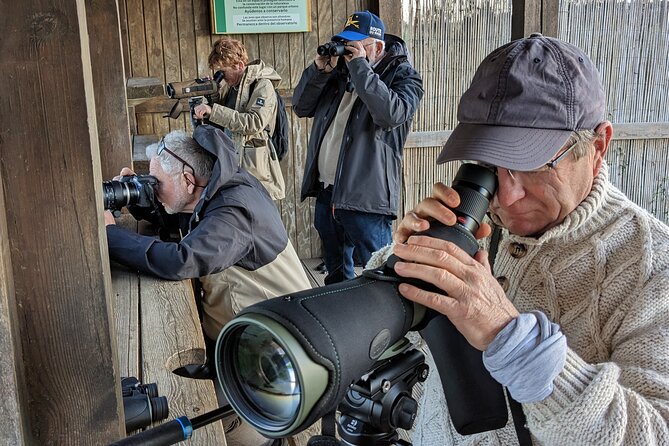
This is the kind of birding day that stays interesting even if you are not glued to a single “target species.” You start on the coast, move into a major Andalusian wetland, then work your way inland and up toward limestone viewpoints and national park habitat.
That variety is not just scenic. It changes what birds you are likely to see, and it keeps you from getting stuck in one mode all day. If you come with binoculars and curiosity, you get to use both.
Also, the tour is private. With a group size capped at 4, you spend less time squeezing around other people and more time actually scanning. That sounds small, but it adds up fast when you are looking at birds at distance.
Still choosing? Put this next to a few other Malaga days:


Price and What You Really Get for Up to Four
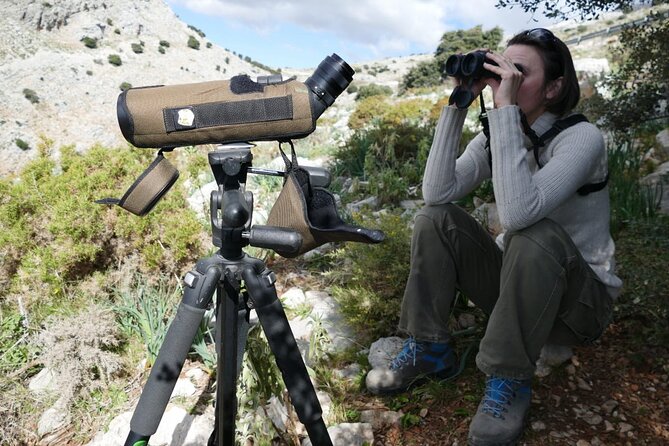
The price is $433.72 per group for up to 4 people, over about 8 hours. If you can fill all seats, the effective cost is roughly $108 per person, which is often competitive for a private guided day in a region as spread out as Málaga.
What you are paying for here is not only guiding. You are paying for a planned route that hits multiple birding habitats, plus pickup help so you are not doing awkward half-solutions with local transport while you chase good viewing windows.
If you are a solo traveler or a couple, it can still be good value, just be realistic about cost per person. This works best when you can split the group size, or when you genuinely want the guide to tailor focus instead of herding a larger group.
The Route in Plain English, Plus How to Prepare
The day runs roughly 8 hours, with five birding stops. The timing is structured so you get longer viewing at the biggest birding “engine,” the Guadalhorce Estuary, then shorter, targeted stops at coastal points and upland lookouts.
Here is the flow, in the order you’ll experience it:
- Punta de Calaburras and the Calaburras lighthouse area (1 hour 30 minutes)
- Playa Guadalhorce, centered on the Guadalhorce Estuary (2 hours 30 minutes)
- Rio Grande riparian area (1 hour)
- Mirador de Juanar area, with birding plus views (1 hour 30 minutes)
- Sierra de Las Nieves National Park area, focusing on a reservoir and stream (1 hour 30 minutes)
For preparation, think “birding basics,” not “tourist day.” Bring binoculars if you have them, and wear shoes that can handle varied paths. Even in winter, you can get cool breezes at coastal points, while upland stops can feel warmer depending on the day.
And yes, because the guide is doing real-time habitat reading, you should expect some standing and scanning. If you dislike that, tell the guide early so they can pace things in a way that still helps you see birds.
Stop 1 Punta de Calaburras and the Calaburras Lighthouse: Coastal Birding Momentum
You begin at Punta de Calaburras and the coastal area around Cabo Pino and the Calaburras lighthouse. This sits in the Calahonda marine protected area, and the big idea is timing.
Coastal areas like this can be especially productive in winter and during migration season. Translation: you may see seabirds and marine-coastal species when conditions funnel birds close to shore, and when weather helps them feed.
You get about 1 hour 30 minutes here, which is a good chunk for coastline scanning. It’s long enough to learn the local “pattern,” like where birds travel across your field of view, and whether they prefer rocky edges, open water, or sheltered spots.
Possible drawback: coastal birding can be weather-sensitive. If wind is strong or visibility is poor, you may have to work harder with slower scanning and shorter bursts of looking.
A different plan for the same Malaga afternoon:
- From Málaga: Caminito del Rey Day Trip & Guided Tour
★ 4.8 · 4,683 reviews - From Malaga and Costa del Sol: Gibraltar Tour
★ 4.4 · 4,483 reviews - Malaga: Teatro Flamenco Malaga Live Flamenco Show
★ 4.7 · 4,254 reviews - From Málaga: Ronda+Setenil de las Bodegas with Little Train
★ 4.6 · 4,115 reviews - From Malaga: Full-Day Trip to Gibraltar
★ 4.6 · 3,516 reviews
Stop 2 Playa Guadalhorce and the Guadalhorce Estuary: Where the Bird Day Really Starts
Stop 2 is the anchor of the whole outing. You spend about 2 hours 30 minutes around Playa Guadalhorce and the Guadalhorce Estuary, described as one of Andalusia’s most attractive wetlands and among the very best bird watching areas in Spain.
This is where you should expect waterfowl and waders. On the best days, the reserve can produce up to around a hundred species in a small area. That number is a reminder that estuaries are mixing bowls. Birds that feed along edges, birds that shelter in shallows, and birds that move through on passage all show up when conditions line up.
Why the longer time matters: waders are not usually spotted in the first minute. You often need to scan slowly, read movement, then confirm details like shape, stance, and behavior. A wetland deserves the extra time, and you’re given it.
Practical note for your viewing habits: try not to lock your eyes on one direction for the whole session. Estuaries reward scanning across zones, especially where water channels meet shore and where birds shift after feeding.
Stop 3 Rio Grande: Riparian Birds in a Narrow, Productive Window
After the estuary, the day shifts to the Rio Grande. This is a riparian forest setting, meaning the birds you find tend to be linked to water-side vegetation.
You only get about 1 hour here, so think of it as a targeted look. Riparian zones can be subtle, because the habitat is complex and birds can hide in foliage. The win comes when the guide points out likely micro-habitat areas, like edges, shaded stretches, or spots where insects and cover concentrate.
This is also a good moment to break your “big day brain.” If the estuary felt intense, this stop can feel calmer. You may get fewer total sightings than at the estuary, but each observation can feel more “specific” because the birds are tied to vegetation and shade.
Stop 4 Mirador de Juanar: White Limestone Views and Timing for Raptors
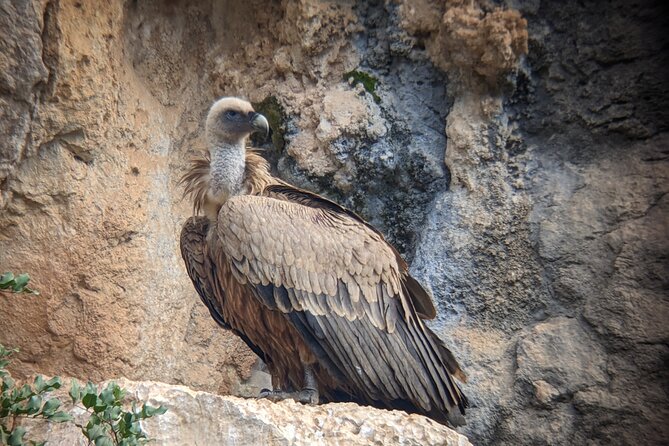
Next comes Mirador de Juanar and the El Juanar area, known for its white limestone mountain and wide views over the Costa del Sol and Africa. Those views are not just scenic decoration. They help you bird because raptors and other soaring birds often use open terrain corridors and can be spotted against a clear backdrop.
The tour timing is described as should be good for birds of prey. You will not be promised specific species, but the plan is clearly built around the idea that certain daylight conditions and vantage points improve your odds.
You also have a practical advantage here: on hot days, the pine forest offers shade. That matters if you are birding under sun for hours earlier. A little shade turns “endurance walking” into “still enjoyable birding,” which is not trivial in southern Spain.
If you are sensitive to heights, you might want to keep your focus on spotting, not wandering. Mirador-style points reward staying near the best scanning zones and not drifting away from the group.
Stop 5 Sierra de Las Nieves National Park Edge: Reservoir and Stream Birding
The last stop brings you toward Parque Nacional Sierra de Las Nieves. The birding focus is on a nearby Mediterranean reservoir and stream that flows from the Sierra de Las Nieves area.
This is a different flavor of water habitat than the estuary. Instead of tidal edges and open wetland flats, you’re likely dealing with calmer water, stream edges, and the kind of habitat where birds associate with both water and surrounding vegetation.
You get about 1 hour 30 minutes here, which is enough time to scan water margins and try for birds that feed or perch near inflowing water. Because the stream connects to national park terrain, you may find more variety than you’d expect from a small water feature.
Practical consideration: this is a good stop to slow down. Waterbirds and woodland-associated birds can be harder to spot than they look on paper, and the payoff comes from patient scanning, not rushing from point to point.
How the Guide Helps You See More: Florent’s Bird Plus Nature Approach
The biggest reason this kind of tour feels worth it is not just where you go. It’s how you go.
In one standout experience, the guide, Florent, was friendly and kind, and his expertise went beyond birds. He explained insects and plants too, and that helps your brain connect the dots. When you understand what the habitat is feeding, you get better at guessing where birds will be.
The same theme shows up in the result: one birder used the day to spot 30 new species for their life list. That is not magic, it’s the outcome of a guide helping you focus on the right cues, at the right time, in the right habitat.
If you want to get the most out of the day, tell your guide your priorities early. Are you chasing seabirds, raptors, waders, or just learning how to spot everything well? A tailored day makes you see more, because you scan with purpose instead of hoping.
Also ask questions while you’re walking. In birding, your understanding grows in transit, when the guide points out why a habitat looks like a bird habitat.
Value for Different Birders: What You’ll Enjoy Most
This tour tends to be a strong fit if you like:
- A mix of habitats in one day, without feeling rushed between totally unrelated locations
- A guide who explains the surrounding ecosystem, not only bird names
- Private pacing, especially if you prefer time to focus on details
It can also work for beginners, as long as you are willing to slow down and learn your way around coastal and wetland birding. The stops are logical, and the day is structured so you are not thrown into one habitat and left there.
Where it may not fit is if you want a deep, long hike into one specific area. This is about switching habitats efficiently, and you’ll spend more time observing than trekking far off-route.
Best Time to Go, Based on the Habitats Here
The tour description hints at seasons that matter, especially for coastal birding. Punta de Calaburras is described as more abundant in winter and during migration season.
The Guadalhorce Estuary is also a place where conditions influence what you see, and the “best days” comment fits the reality of wetlands. If you are flexible with dates and can travel during active migration windows, your odds improve.
If your schedule is fixed, no worries. You can still see plenty. Just adjust expectations toward steady variety, not a guarantee of a rare highlight species on cue.
Should You Book This Birding Costa del Sol Day Tour?
I’d book it if you want a private, English-speaking birding day that actually moves through different habitats, with real time at the Guadalhorce Estuary. The route makes sense, the pacing is built around viewing time, and the guide style can help you spot more than you might manage on your own.
Skip it if you need a light day with minimal standing, or if you know you get frustrated when weather changes plans. This is weather-dependent and designed for you to be outside for hours.
If you can travel during winter or migration periods, you’re leaning into what the coastal habitat is best known for. And if you are the type who keeps a life list, you will likely enjoy how the day pushes you to notice many different birding cues across habitats.
FAQ
How long is the Birding Costa del Sol day tour?
It lasts about 8 hours.
How much does the tour cost?
The price is $433.72 per group, for up to 4 people.
Is pickup offered?
Yes. Pickup is offered, and the meeting point is flexible depending on your group.
Where does the tour start?
The start is Marbella, Málaga, Spain.
Is the tour offered in English?
Yes, it is offered in English.
Is this a private tour?
Yes. It is a private tour/activity, and only your group participates.
What stops are included on the route?
The main stops are Punta de Calaburras and the Calaburras lighthouse area, Playa Guadalhorce and the Guadalhorce Estuary, Rio Grande, Mirador de Juanar, and Parque Nacional Sierra de Las Nieves.
What if the weather is bad?
The tour requires good weather. If it’s canceled due to poor weather, you’ll be offered a different date or a full refund.
Can I cancel for a full refund?
Yes, you can cancel for a full refund up to 24 hours in advance of the experience’s start time.
If you cancel less than 24 hours before the start time, the amount you paid will not be refunded.
New arrivals around Malaga
- Malaga: group walking tour★ 5.0 · 1 review
- Andalusian Wine Tasting Tapas and DE wine tastings★ 5.0 · 1 review
- Guided tour of Malaga fishing scene with cooking workshop★ 5.0 · 1 review
- Malaga Moorish & Roman Heritage: Old Town, Alcazaba & Cathedral★ 4.0 · 1 review
- Marbella: Climb La Concha on Private Guided Hiking Trip★ 5.0 · 1 review
- Malaga: Explore Malaga on a Solar Scooter★ 5.0 · 1 review
Tours, compared.
Alcazaba and Roman Theatre Guided Tour With Entry
Read our review →
Ronda and Setenil Tour with Free Time and Map from Málaga
Read our review →

Caminito del Rey & White Village Tour with Tapas from Málaga
Read our review →