
Reviewed · MÁLAGA
La Peste Negra: Visita Teatralizada
Plague stories hit harder after dark. This 1.5-hour theatrical walk in Málaga turns 17th-century fear into a real, guided street experience, with a live Spanish guide and performers who bring the characters to life. What I like most is the pest doctor angle, and the way the walk connects the drama to the city’s real monuments.
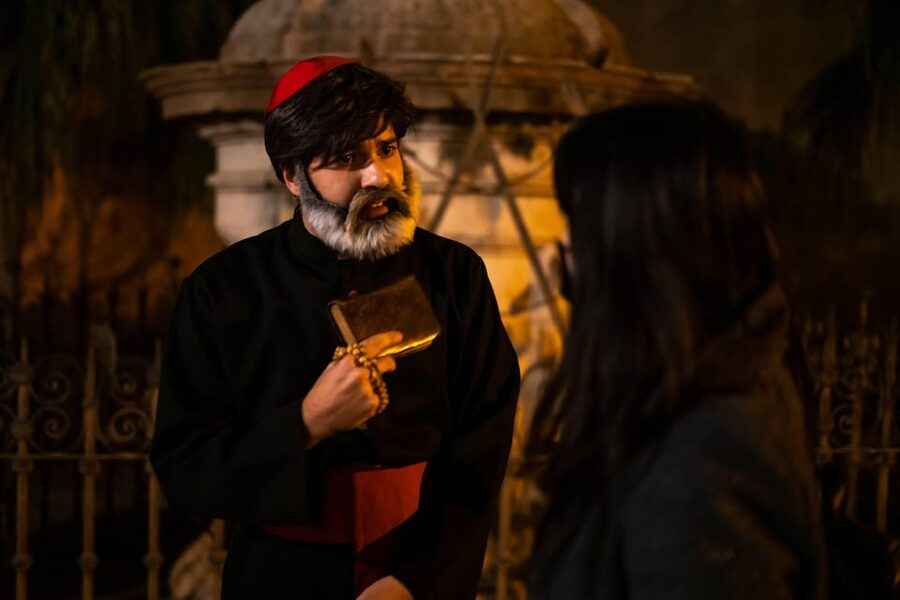
I especially enjoy how the show mixes social roles, from official power like an obispo to people caught on the ground, like characters described as stinking and Ganapanes. It feels less like a lecture and more like you are watching the city react in real time.
One thing to consider: it is not for everyone. The tour is not suitable for children under 6, and it is not designed for people with mobility impairments, so plan accordingly if that affects you.
In This Review
- Key highlights you should not miss
- A night walk through Málaga’s 17th-century plague fear
- Where it starts near the Museum of Málaga and Plaza de la Aduana
- The guide, the story, and the characters you meet
- What the pest doctor does, and why it is the emotional center
- The walking route through Málaga’s key historic monuments
- The social reality behind the scare: fear in every class
- Price and value: is $21 worth it for 1.5 hours?
- Who this tour suits best, and who should skip it
- Practical tips to make the night run smoothly
- Should you book La Peste Negra in Málaga?
- FAQ
- How long is the La Peste Negra theatrical visit?
- Where do I meet for the tour?
- What language is the tour guide speaking?
- What is the price per person?
- Is there a recommended arrival time?
- Is it suitable for young children?
- Is it suitable for people with mobility impairments?
- Can I cancel and get a refund?
Key highlights you should not miss
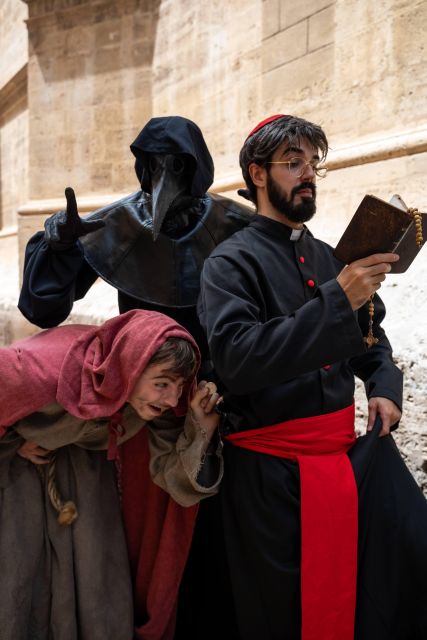
- Pest doctor check: the doctor may examine you in case of bubones
- Nighttime storytelling through Málaga’s historic center
- 17th-century character gallery: from obispo to enterrador and Ganapanes
- Monuments on the route tied to the plague story, like the Alcazaba area and the Catedral de la Encarnación
- Finishes at Jardines de la Puerta Oscura for a calm landing after the scare
A night walk through Málaga’s 17th-century plague fear
This is the kind of tour where the setting matters. La Peste Negra is staged as a nighttime walk through the historic center, and that makes the plague topic feel immediate, not distant. You are not just learning names, you are moving through the places where people would have had to face panic, rumor, and illness.
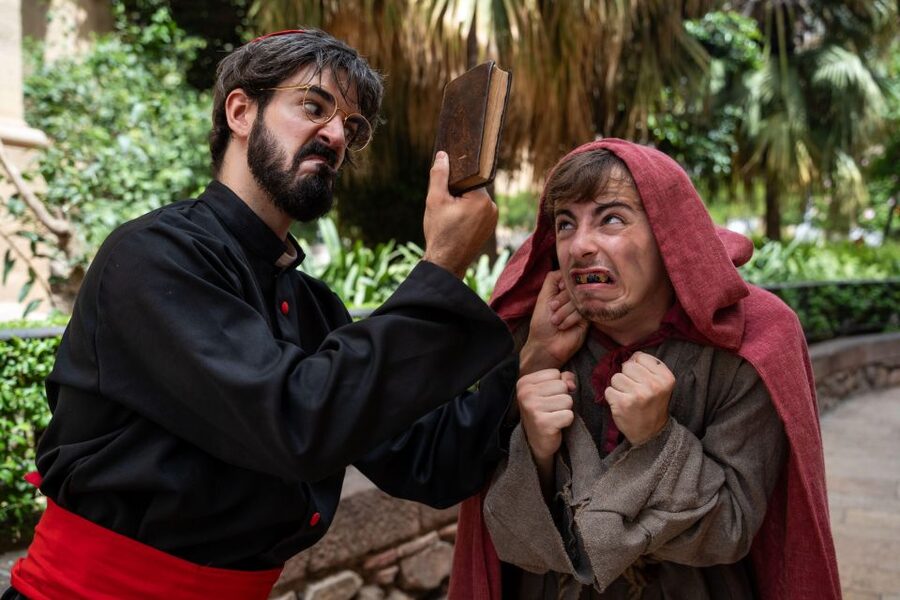
The core idea is simple, and it works: you follow a “doctor of the plague” and other figures like an obispo or an enterrador, and each character shows a different side of what life felt like in 17th-century Málaga. Along the way, you pick up the sense that disease did not care about status, because the story explicitly points out that many illnesses affected people across social classes.
If you like history that comes with atmosphere and a clear storyline, this format is a great fit. The “theatrical visit” style is also a smart way to keep attention during an hour and a half, because the facts ride on the performance.
Still choosing? Put this next to a few other Malaga days:



Where it starts near the Museum of Málaga and Plaza de la Aduana
Before anything theatrical happens, you need the timing right. The meeting point is the main entrance to the Museum of Malaga, in the Las Palmeras Zone, and it is important to arrive 15 minutes early.
The start scene is connected to the Plaza de la Aduana area, so once you meet, expect the group to head into the historic center as the show begins. I like that this keeps the logistics straightforward: you have one clear meeting place, and then the action shifts toward the old streets.
Practical note: this is a walking experience, and it is at night. Wear comfortable shoes, keep your phone brightness low so you are not constantly blinding yourself, and plan for uneven pavement that is common in older city centers.
The guide, the story, and the characters you meet
The tour is led by a live guide in Spanish, and that matters for immersion. When the story is delivered in Spanish, you get the cadence and emphasis the performers are clearly aiming for, especially during character moments.
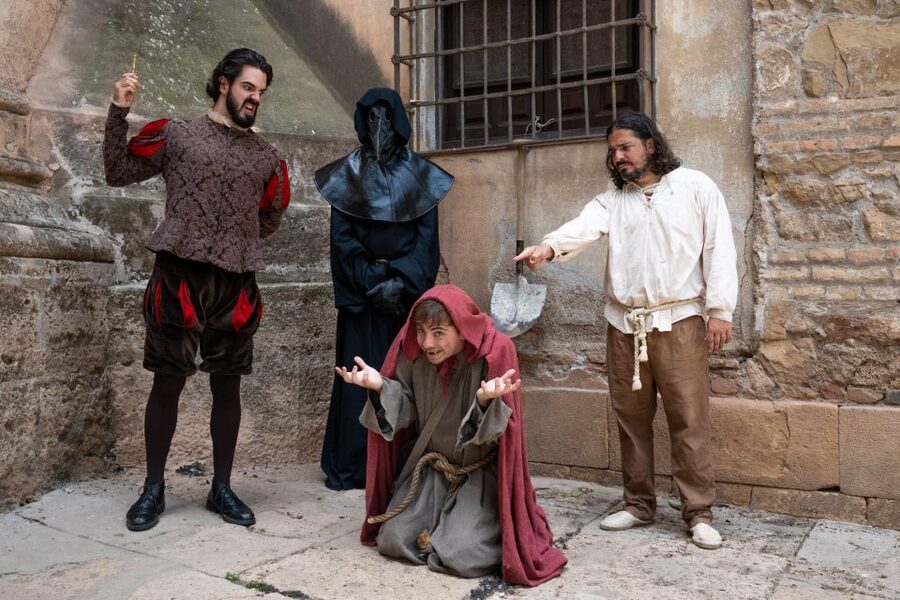
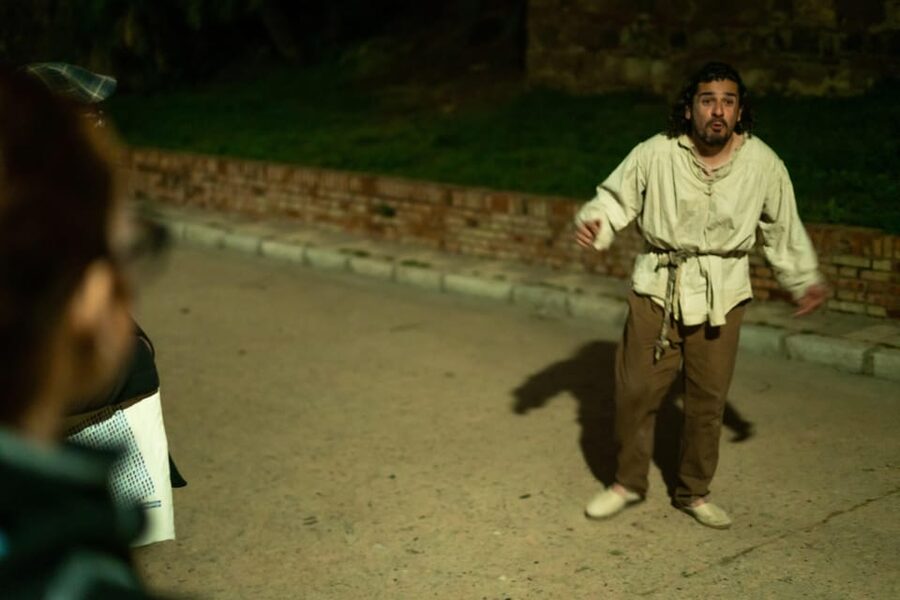
The main characters are built around different “jobs” people associate with crisis. You will meet the médico de la peste, plus other figures such as a bishop and an undertaker. The tour also points to the presence of very different street-level roles, including characters described as stinking and Ganapanes.
What makes this setup genuinely useful is that it shows the plague as a whole system, not only a medical problem. In the script, you see methods used to treat the sick, and you also see who handles the grim side of outbreaks, including the people responsible for burials. That combination is what turns the tour into a story with edges.
What the pest doctor does, and why it is the emotional center
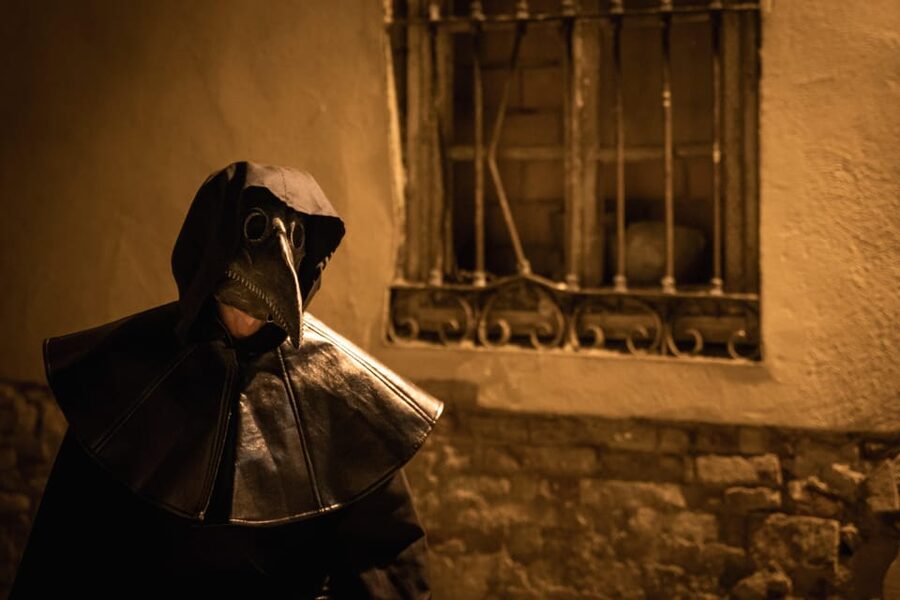
The highlight that most people will remember is the pest doctor examining you if needed, specifically “in case you have bubones.” That is not just a gimmick. It is a way of translating what you hear into something your body understands, even if it is only part of the staging.
The plague theme in 17th-century settings often gets reduced to charts and dates. Here, the tour makes it more human by placing you in the role of someone who might be suspected. Even if you already know the historical background, this kind of audience interaction forces you to feel the anxiety that would have followed a single visible symptom.
Also, the doctor character gives you a clear lens for understanding the time period. The script frames plague as something feared on many levels at once: medical, religious, social, and logistical. That is why the doctor’s presence anchors the whole walk.
A different plan for the same Malaga afternoon:
- From Málaga: Caminito del Rey Day Trip & Guided Tour
★ 4.8 · 4,683 reviews - From Malaga and Costa del Sol: Gibraltar Tour
★ 4.4 · 4,483 reviews - Malaga: Teatro Flamenco Malaga Live Flamenco Show
★ 4.7 · 4,254 reviews - From Málaga: Ronda+Setenil de las Bodegas with Little Train
★ 4.6 · 4,115 reviews - From Malaga: Full-Day Trip to Gibraltar
★ 4.6 · 3,516 reviews
The walking route through Málaga’s key historic monuments
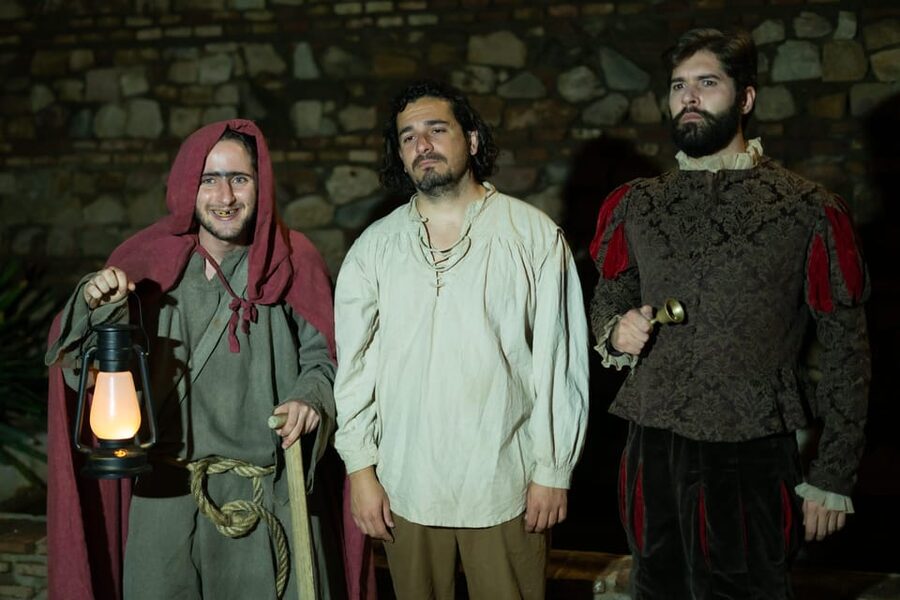
One of the best values in this tour is that it does more than talk near a single square. Over the course of the walk, you visit major monuments in the Historic Center that are tied to the plague story in 17th-century Málaga.
Two of the most notable stops mentioned are the Alcazaba and the Catedral de la Encarnación. The Alcazaba area is the kind of setting that naturally reinforces the idea of a city under stress, because it is visually tied to older power and defense. The cathedral, on the other hand, helps explain why an obispo character fits the story so well, since religious authority was part of how people interpreted disasters.
Then you finish at Jardines de la Puerta Oscura. I like this ending because gardens can feel like a reset. After moving through heavy themes, you get a calmer visual break that helps you process what you just learned and watched.
A small consideration: because the tour is theatrical, you may find you pause frequently for character moments and guided storytelling. That is normal for this format, but it does mean the experience can feel less “speed-walk sightseeing” and more “planned dramatic route.”
The social reality behind the scare: fear in every class

What I appreciate most is that the story does not treat plague as something that only hit the poor. It explicitly notes that in that time, illnesses like viruela, tuberculosis, and lepra could affect people across class lines. Then it focuses on the plague as one of the worst nightmares for the population of Andalusia.
That combination helps you understand why outbreaks were so destabilizing. When everyone is vulnerable, you do not just lose health, you lose trust. In the tour, that loss of trust shows up through the variety of characters: the doctor, the bishop, the undertaker, and the street figures.
It also gives you a clearer idea of what “methods used to cure the sick” might have meant in the context of the era. The tour frames them as approaches used at the time, not modern medicine, which is important for accuracy. You are learning how people tried to respond with the tools they had, and how those attempts played out in public.
Price and value: is $21 worth it for 1.5 hours?
At about $21 per person for a 1.5-hour live, theatrical walking tour, the value depends on what you want. If you prefer quiet, fact-only history tours, you might feel it is pricier than a standard guided walk. If you enjoy storytelling, performance, and learning through a narrative, it is a very practical deal.
Here is why the pricing feels fair to me. You get a live Spanish guide plus a theatrical production with multiple characters, and you cover key historic stops in the center. For a single ticket, you are paying for both the guide and the performance layer, which is the part that makes the plague story stick in your memory.
Also, because the duration is 1.5 hours, you are not stuck for half a day. That makes it easier to fit into a Málaga day, especially if you already plan to see landmarks like the Alcazaba and the cathedral area on your own.
Who this tour suits best, and who should skip it
This is a good match if you like:
- Theatrical history with characters and role-based storytelling
- Night walking experiences where atmosphere is part of learning
- Plague topics explained through a local, city-specific lens, focused on 17th-century Málaga
It is also not a great match if:
- You are traveling with a child under 6, since it is not suitable for that age group
- You need mobility-friendly access, because it is not suitable for people with mobility impairments
If you are sensitive to intense themes like burials and sickness, it helps to know the tour leans into fear on purpose. That is not a gentle museum experience. It is designed to feel unsettling, like the subject matter.
Practical tips to make the night run smoothly
Here are the small things that make a difference with a theatrical night tour:
- Arrive 15 minutes early so you do not miss the start scene
- Wear shoes you trust on older stone streets
- Dress for evening temperatures, especially if you tend to get cold outdoors
- Keep your attention on the guide and performers, since the story unfolds as you walk and pause
One more tip: since the tour is in Spanish, make sure you are comfortable enough to follow spoken storytelling. Even if your Spanish is basic, the visible character acting can carry a lot of the meaning, but the guide’s narration is the backbone.
Should you book La Peste Negra in Málaga?
I think you should book if you want a different kind of Málaga night. This tour gives you a guided story with real city landmarks, plus interactive character moments like the pest doctor and the bubones check concept.
You should skip it if you need a totally accessibility-friendly experience or if you would rather learn about the plague in a quiet, classroom-style format. Also, if you dislike theatrical scares or heavy themes around illness and burials, this one might feel too intense for your taste.
If you are on the fence, use this simple test: do you enjoy history when it is performed, not just recited? If yes, La Peste Negra is a strong choice for your time in Málaga.
FAQ
How long is the La Peste Negra theatrical visit?
The tour lasts 1.5 hours.
Where do I meet for the tour?
You meet at the main entrance of the Museum of Malaga (Las Palmeras Zone).
What language is the tour guide speaking?
The live tour guide speaks Spanish.
What is the price per person?
The price is $21 per person.
Is there a recommended arrival time?
Yes. You should arrive 15 minutes before the tour starts.
Is it suitable for young children?
No. It is not suitable for children under 6 years old.
Is it suitable for people with mobility impairments?
No. The tour is not suitable for people with mobility impairments.
Can I cancel and get a refund?
Yes. You can cancel up to 24 hours in advance for a full refund.
New arrivals around Malaga
- Malaga: group walking tour★ 5.0 · 1 review
- Andalusian Wine Tasting Tapas and DE wine tastings★ 5.0 · 1 review
- Guided tour of Malaga fishing scene with cooking workshop★ 5.0 · 1 review
- Malaga Moorish & Roman Heritage: Old Town, Alcazaba & Cathedral★ 4.0 · 1 review
- Marbella: Climb La Concha on Private Guided Hiking Trip★ 5.0 · 1 review
- Malaga: Explore Malaga on a Solar Scooter★ 5.0 · 1 review