Reviewed · HISTORICAL TOURS
A Self-Guided Tour of Ancient Malaga’s History
Malaga gets easier when your phone guides you. This self-guided audio route strings together the port, cathedrals, Roman remains, and Picasso stops into one smooth walk, with offline audio so you are not fighting spotty signal. It is a simple way to see the city’s big ideas without booking a formal tour.
I especially like that the directions feel easy to follow, with GPS that tracks your position and tells you when to turn or slow down. You also get a smart length of time, about 45 minutes to 1 hour, which works well when you want history but still want time for lunch or a quick wander.
One thing to consider: you provide your own smartphone and headphones, and the route is self-guided. It also leans into specific highlights like Teatro Romano and the cathedral, so if you are chasing one particular Roman monument style, you may feel you did not hit every dream stop.
In This Review
- Key highlights before you go
- Price and value for this $9.99 audio route
- VoiceMap in Malaga: how the GPS and offline audio feel on foot
- Start at Estatua del Cenachero and Plaza de la Marina
- Plaza del Obispo, the cathedral locals call Manquita, and St Augustine’s mix
- Picasso area: museums nearby, Plaza de la Merced, and Ateneo de Málaga
- Las Bodegas El Pimpi and Plaza de la Juderia, then Las Bodegas energy meets the old Jewish quarter feel
- Teatro Romano de Málaga and Alcazabilla: Roman roots and fortress views
- Parroquia Santiago Apóstol Málaga: Catholic faith with Islamic influences
- Plaza de la Merced to Monumento a Torrijos, then Picasso statue and Casa Natal
- Teatro Cervantes, Museo Carmen Thyssen, and Ateneo de Málaga along the cultural spine
- Church of the Holy Martyrs Ciriaco and Paula, plus the food-and-life vibe in Plaza de Uncibay
- End at Plaza de la Constitución, the square that ties it together
- Timing tips so the 45 to 60 minutes stays comfortable
- Who should book this Malaga self-guided audio walk
- Should you book it?
- FAQ
- Is the self-guided tour available in English?
- How long does the tour take?
- Where does the tour start and where does it end?
- Do I need headphones?
- Do I need mobile data to use the tour?
- What app do I use for the tour?
- Is transportation or food included?
- When can I start the tour?
- Is this tour private?
- Can I cancel for a refund?
Key highlights before you go
- Offline VoiceMap download means audio, maps, and geodata stay available while you walk
- GPS-based routing helps you avoid staring at your screen every few seconds
- A tight 45 to 60 minute loop hits essentials without turning into an all-day project
- Picture-perfect city anchors include Manquita, Teatro Romano de Málaga, and Plaza de la Merced
- Tapas mentions to plan lunch help you decide where to eat even without dining included
Price and value for this $9.99 audio route
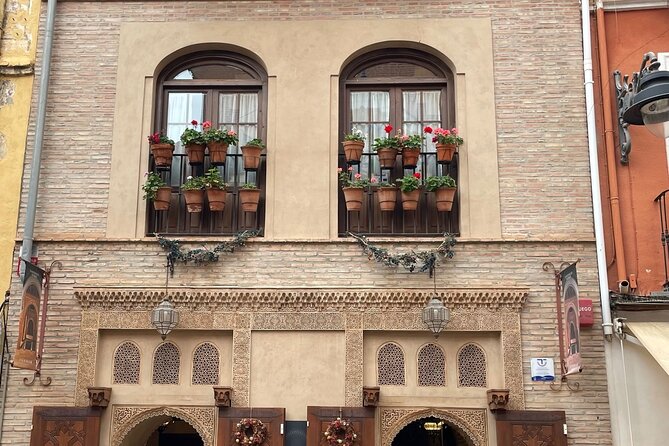
At $9.99 per person for a 45 to 1 hour walking experience, this is the kind of deal that works on a first trip. You are not paying for a guide’s time on a schedule, you are paying for your own pace, your own stops, and lifetime access to the audio.
You also get a practical bundle for your phone life: the VoiceMap app plus offline access to audio and navigation data. That combination usually saves time, because you can start walking immediately instead of troubleshooting settings mid-street.
It helps that the tour is offered in English and is designed for most walkers. You can keep it as a focused “see the core” route, or treat it like a sampler and return later for deeper museum time.
A few other Andalusian days to consider


VoiceMap in Malaga: how the GPS and offline audio feel on foot
You use the VoiceMap app on Android or iOS, and you download what you need for offline listening. That matters in Malaga because the center is very walkable, but signal can be unpredictable once you are near older buildings and narrow streets.
The experience includes offline access to audio, maps, and geodata, so you should be able to keep your bearings even when mobile data drops. The audio route is also designed to cue you as you pass major landmarks, so you are not guessing what to look for next.
You do need to bring the essentials: smartphone and headphones are not included. If you hate earbuds, test your preferred setup before you leave your hotel so you are not stuck fiddling with cords in the sun.
One more practical note: this is listed as a private activity, meaning only your group participates. It is not a group tour with a meet-up crowd, which keeps the pace under your control.
Start at Estatua del Cenachero and Plaza de la Marina
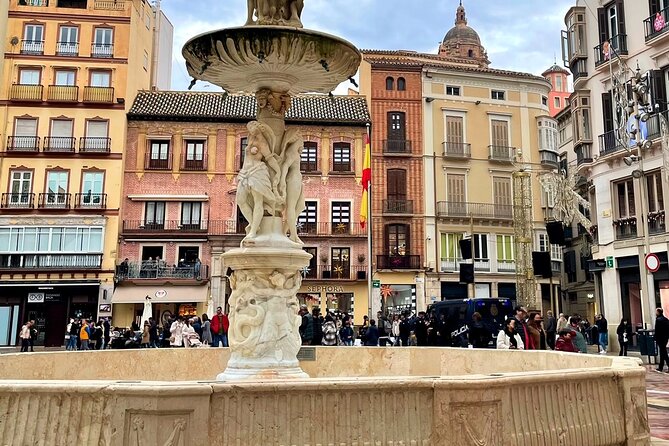
Your walk begins at Estatua del Cenachero, Plaza de la Marina 1, Distrito Centro, 29015 Málaga. This spot is a smart start because it ties the sea to the city, right where the port energy meets historic Malaga.
The audio focuses on the meaning of the fisherman statue and the humble fish vendors around it. That may sound simple, but it is a good framing trick: you learn to see the city as more than buildings, you see how everyday trade shaped its identity.
From there you pass through Plaza de la Marina, a central square where modern day activity sits right beside older significance. The value here is pacing: you get a quick history hook early, so the rest of the route feels like a story instead of random stops.
Plaza del Obispo, the cathedral locals call Manquita, and St Augustine’s mix
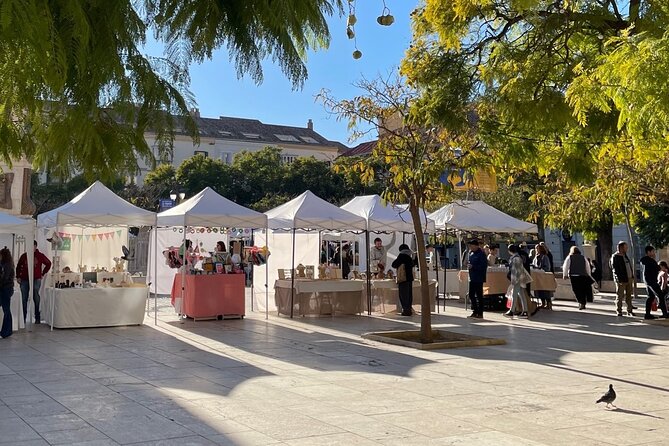
Next up is Plaza del Obispo, where you learn the cultural role of the area as you move deeper into the historic core. This is one of those stretches where you can slow down, take a few photos, and let the audio connect what you are seeing to why it matters.
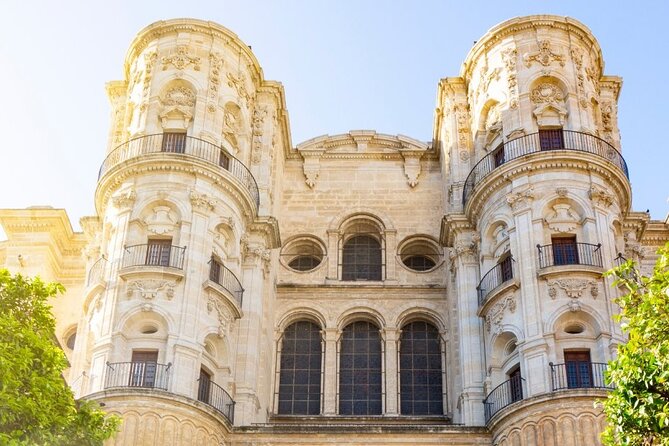
Then comes the big landmark: Malaga’s cathedral, nicknamed Manquita. The nickname matters, because it makes the building feel personal. You are not only admiring architecture as a distant object, you are hearing why locals use a nickname with affection.
After that you pass by Church of St Augustine, noted for Moorish influences. That mix is a real Malaga theme, and this stop gives you a quick taste of how Islamic-era design ideas show up in Christian religious spaces. Even if you only glance from outside, the audio framing helps you notice details instead of just passing by.
Practical tip: churches can invite you to pause longer than you planned, especially if the audio nudges you toward what to watch for. If you are short on time, plan one photo moment per church and keep the rest for your return visit.
A different plan for the same Malaga afternoon:
- Malaga: Catamaran Sailing Trip with Sunset Option
★ 4.4 · 8,613 reviews - Málaga: Alcazaba and Roman Theatre Guided Tour With Entry
★ 4.8 · 5,792 reviews - Ronda and Setenil Tour with Free Time and Map from Málaga
★ 4.8 · 5,344 reviews - From Málaga: Caminito del Rey Day Trip & Guided Tour
★ 4.8 · 4,683 reviews - From Malaga and Costa del Sol: Gibraltar Tour
★ 4.4 · 4,483 reviews
Picasso area: museums nearby, Plaza de la Merced, and Ateneo de Málaga
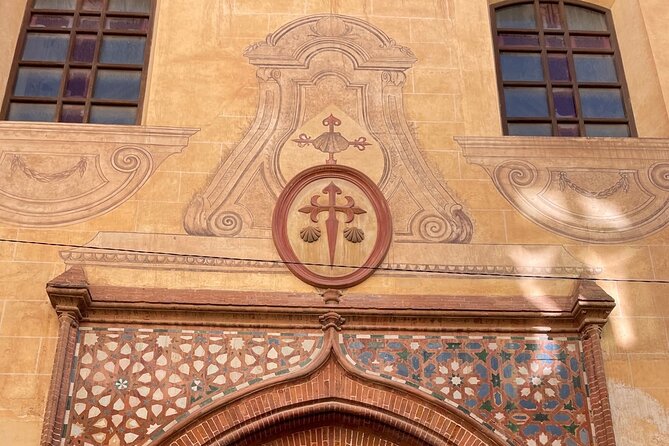
If you have even a passing interest in Picasso, this route gives you a very efficient tour of his surrounding map. You get a glimpse of the Picasso Museum Málaga as you explore nearby streets, and later you pass Estatua de Picasso, so you keep landing on key landmarks.
The route then takes you to Plaza de la Merced, the square tied to Picasso’s birth and childhood. The audio includes the story of his remarkable survival at birth. It is a short moment, but it is the kind of detail that makes the place feel human, not like a postcard caption.
You also pass Museo Casa Natal de Picasso, dedicated to his childhood home. Even if you do not enter, the point is to connect the birthplace square with the later museum space so you know what you are looking at.
On the cultural side, you stroll by Teatro Cervantes, picking up the artistic energy of the area. Then you pass Museo Carmen Thyssen Málaga, which adds another layer to the city’s art ecosystem without forcing you to pick a museum ticket today.
One of the more interesting audio facts sits at Ateneo de Málaga, described as a cultural center that was once the San Telmo School of Fine Arts, where Picasso’s father taught drawing. That detail gives you a reason to connect art education with Picasso’s story, not just the famous name.
Practical tip: since you are walking by several art stops, decide ahead of time which one you want to commit to for entry. The audio gives you context, but your time decides your museum priorities.
Las Bodegas El Pimpi and Plaza de la Juderia, then Las Bodegas energy meets the old Jewish quarter feel
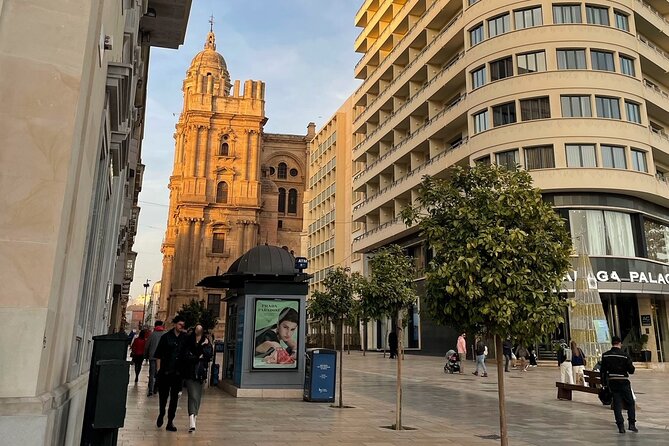
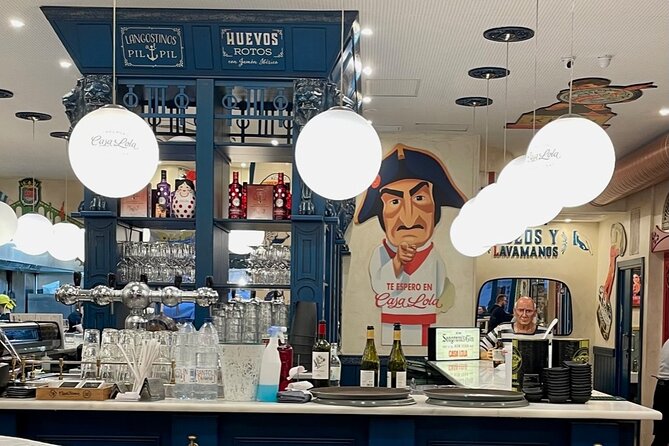
Not every audio tour thoughtfully routes you toward food culture, but this one does. You pass by Las Bodegas El Pimpi, one of the city’s oldest tapas bars. You are not entering on this walk, but the audio points to why it matters in Malaga’s culinary tradition.
This is useful even if you are not hungry yet. It tells you where the serious local tapas stops are, so when you do get hungry you are not gambling on random-looking doors.
From there you head toward Plaza de la Juderia, a square with strong historical ambiance. You are not told to treat it like a museum. Instead, you use it as a pause point, a chance to stand and take in the feel of an area that carries layers of Malaga’s past.
Then you move onward, and the route keeps a steady rhythm of landmark plus interpretation. That makes it easier to stay engaged even when the street scenes look similar.
Teatro Romano de Málaga and Alcazabilla: Roman roots and fortress views
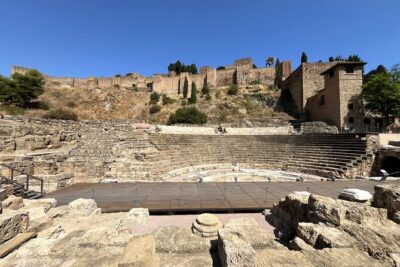
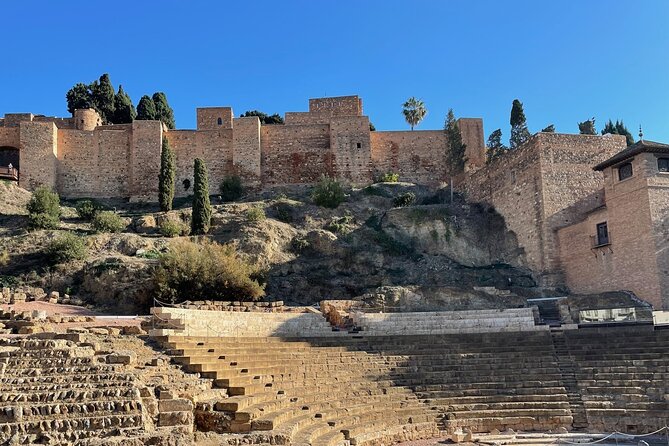
Next, you catch Teatro Romano de Málaga, the ancient Roman theater. This is a key stop because it proves Malaga had deep roots long before later empires left their marks. And it is also easy to appreciate because you can see enough from the outside to understand why it was important.
After the Roman moment, the route shifts toward the fortress area with Alcazabilla, a street with views of the Alcazaba fortress. The value of this section is the payoff: the audio is telling you about architecture and place, then the view gives you the physical sense of why fortifications mattered.
If you want a photo, this is a great part of your walk for it. It is also a good spot to slow down so your brain can switch gears from Roman to Moorish-linked city structure.
Parroquia Santiago Apóstol Málaga: Catholic faith with Islamic influences
The route then passes by Parroquia Santiago Apóstol Málaga, described as a Catholic church reflecting Islamic influences. This stop reinforces a theme you start to see across Malaga: styles overlap.
I like this kind of lesson built into a walk because it saves you from needing a separate lecture. You are learning the city’s blend in real time as you move, not later in a book.
In practical terms, treat this stop as another outside-looking moment unless you want to linger. If you are the kind of person who reads architectural cues, you will probably spend extra time here.
Plaza de la Merced to Monumento a Torrijos, then Picasso statue and Casa Natal
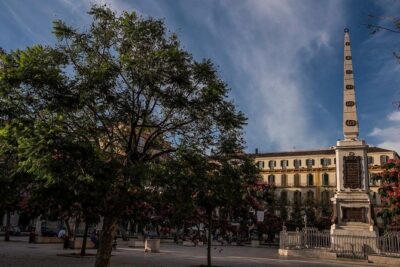
As you continue, the walk threads through more civic and artist-linked points. You pass Monumento a Torrijos, a monument dedicated to the Spanish liberal. It is one of those pauses that can feel quick when you are walking, but it adds political context to the city’s story.
You then catch a glimpse of Estatúa de Picasso, keeping the artist presence from feeling random. And you continue with Museo Casa Natal de Picasso, so the story of Picasso’s early life stays anchored instead of drifting away.
This sequence is helpful if you are trying to connect the dots quickly. You see the name, then you see the places tied to that name.
Teatro Cervantes, Museo Carmen Thyssen, and Ateneo de Málaga along the cultural spine
By the time you reach Teatro Cervantes, you have moved from port and religious sites into the performance and museum world. Teatro spaces are perfect for audio walks because the meaning often shows in details like the building’s role in public life.
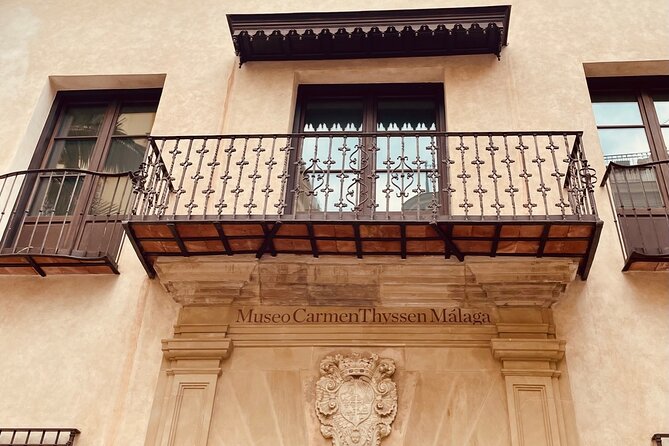
Next, Museo Carmen Thyssen Málaga sits in the cultural landscape as another art option. Even just passing it helps you map where modern-day Malaga gathers around the arts, and it can guide your follow-up choices later.
Then Ateneo de Málaga ties the arts back to Picasso’s family connection through the San Telmo School of Fine Arts detail. This is the kind of bridge that makes a city feel bigger than one famous person.
Church of the Holy Martyrs Ciriaco and Paula, plus the food-and-life vibe in Plaza de Uncibay
The route includes Church of the Holy Martyrs Ciriaco and Paula, adding another layer of religious and historical atmosphere. It helps balance the art-focused parts of the route with faith-driven landmarks.
After that you pass Plaza de Uncibay, described as a square with tapas bars and restaurants. I like this stop because it is a built-in decision point. If you planned your walk at lunch or early evening, this is where you can shift from walking mode into eating mode.
Keep in mind food and drink are not included. But the fact that the route calls out tapas culture is still valuable, because it gives you a realistic lunch plan within walking distance of your history stops.
End at Plaza de la Constitución, the square that ties it together
Your tour ends at Plaza de la Constitución in the Distrito Centro area. This is a strong landing point because it lets the audio finish with the origins of the square’s name, wrapping up the sense of place you built at the start.
Ending in a major square also helps your next move. You can keep exploring nearby streets, head to dinner, or take a transit connection without needing to reverse your entire walk.
Timing tips so the 45 to 60 minutes stays comfortable
This walk is designed to take about 45 minutes to 1 hour, but your pace decides the truth. If you like to pause for photos at each stop, add a little cushion time.
A practical way to handle it: listen through the audio segment for a stop, then take one quick look around before moving on. If a church doorway or a view grabs you, pause longer, but do it intentionally so you still reach the end.
It also helps to bring water, especially if you do the route during hotter parts of the day. Your headphones, water, and basic street sense make the difference between an easy stroll and a tiring walk.
The tour is available every day, with opening hours listed as 12:00 AM to 11:59 PM across the span shown. That means you can pick a time that matches your energy, but daytime still tends to be easiest for spotting details.
Who should book this Malaga self-guided audio walk
This is a great fit if you want:
- An inexpensive, low-effort way to see essential landmarks in central Malaga
- A guided-feeling experience without booking a live tour
- Offline audio and GPS help that lets you walk at your own speed
It may be less ideal if you already know Malaga well and want only deep, ticketed stops. Also, if you crave a very specific Roman monument type beyond Teatro Romano de Málaga, this route may not match that exact wishlist.
One more thing: if you are doing multiple walking experiences back to back, you may notice repeating streets and themes. The upside is you get reinforcement, the downside is you could feel like you spent time on familiar ground.
Should you book it?
Yes, if you are doing your first visit and you want a smart, compact way to understand Malaga’s key layers. For $9.99, the offline audio and GPS-based guidance make it feel far more useful than most one-off maps.
I would book this as your morning plan, then pick one or two places you want to enter for real. If you do that, you turn a short audio loop into a full day of exploring with much less guesswork.
FAQ
Is the self-guided tour available in English?
Yes. The experience is offered in English.
How long does the tour take?
It is listed as about 45 minutes to 1 hour.
Where does the tour start and where does it end?
It starts at Estatua del Cenachero, Pl. de la Marina, 1, Distrito Centro, 29015 Málaga, Spain. It ends at Plaza de la Constitución, Pl. de la Constitución, Distrito Centro, Málaga, Spain.
Do I need headphones?
Yes. Smartphone and headphones are not included, so you will need to bring your own.
Do I need mobile data to use the tour?
No. The experience includes offline access to audio, maps, and geodata.
What app do I use for the tour?
You use the VoiceMap app on Android and iOS.
Is transportation or food included?
No. Transportation and food and drink are not included.
When can I start the tour?
The opening hours are listed as Monday through Sunday, 12:00 AM to 11:59 PM.
Is this tour private?
Yes. It is a private tour or activity, so only your group will participate.
Can I cancel for a refund?
No. The experience is non-refundable and cannot be changed for any reason.
New arrivals around Malaga
- Malaga: group walking tour★ 5.0 · 1 review
- Andalusian Wine Tasting Tapas and DE wine tastings★ 5.0 · 1 review
- Guided tour of Malaga fishing scene with cooking workshop★ 5.0 · 1 review
- Malaga Moorish & Roman Heritage: Old Town, Alcazaba & Cathedral★ 4.0 · 1 review
- Marbella: Climb La Concha on Private Guided Hiking Trip★ 5.0 · 1 review
- Malaga: Explore Malaga on a Solar Scooter★ 5.0 · 1 review
Historical Tours, compared.

Taste of Malaga Tour : Tapas, History and Local Customs
Read our review →
2h Walking Historical Tour–Art, Culture and Legends
Read our review →
Ultimate Malaga History & Tapas – All Included Full Experience
Read our review →
Malaga City Tour 3 Hour Historical Segway Adventure
Read our review →Malaga City Tour: 3-Hour Historical Segway Adventure
Read our review →