
Reviewed · PICASSO MUSEUM TICKETS
Alcazaba to Picasso: Málaga’s Best in a Self-Guided Tour
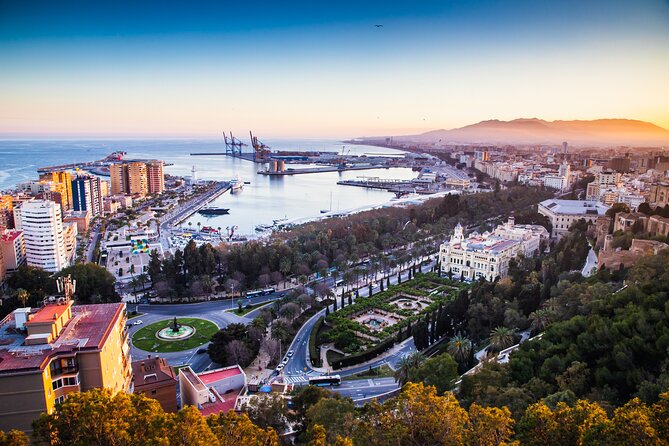
Málaga comes at you from every angle. This self-guided route strings together major landmarks in the city center, with the best payoff coming from the climb and viewpoints near the Alcazaba and Gibralfaro. I especially like how the audio app sets up the Roman theater section, so you know what you’re looking at instead of guessing.
Two real strengths stand out. First, you get a clear spine from classic streets like La Calle Larios and Plaza de la Constitución down to the hilltop fortifications. Second, the mobile ticket plus app map makes it easy to move between stops without hauling paperwork around. One caution: the app can be clunky, and if the audio fails to load on your phone, you’ll lose the main value of the tour.
In This Review
- Key points before you set off
- La Calle Larios: The easy, famous start
- Plaza de la Constitución and Pasaje de Chinitas: where the city slows down
- Two museums in older buildings: Museo de Málaga and the glass obsession
- Museo de Málaga style stop: Spanish and Andalusian art with archaeological finds
- Museo del Vidrio y Cristal style stop: more than 3,000 pieces, room by room
- La Manquita cathedral, Plaza del Obispo, and Iglesia de Santiago
- Roman theater to Alcazaba: the hilltop story you came for
- Gibralfaro Castle: best views, real effort
- Plaza de la Merced and Picasso’s birthplace: art with context in plain sight
- Mercado Central de Atarazanas and Parque de Málaga: snack breaks that feel like local life
- Ayuntamiento de Málaga and Jardines de Pedro Luis Alonso: finishing gently
- Price and value: why this can be a bargain
- When the app works, this tour shines
- Who should book this self-guided Alcazaba to Picasso route
- Should you book it
- FAQ
- How long is the Alcazaba to Picasso self-guided tour?
- What does the tour include?
- Is the tour offered in English?
- Are museum tickets included in the price?
- Do I need private transportation or an in-person guide?
- Can I cancel for a full refund?
Key points before you set off
- A built-in route from port to fortress, so you get both street Málaga and hilltop Málaga
- Roman theater context so the ruins make sense fast
- Two small museums worth your time when the sun or crowds press in
- La Manquita cathedral plus the Episcopal Palace area for great photo angles
- Market-to-park pacing, so you’re not just marching between monuments
- App-dependent experience, test it early and keep your phone charged
La Calle Larios: The easy, famous start
You’ll begin on La Calle Larios, Málaga’s best-known shopping street. It’s wide, pedestrian-friendly, and lined with neoclassical and Art Nouveau buildings that give you instant city character. This is a good first stop because you’re walking on flat ground, so you can settle into the rhythm of the day.
If you’re traveling with family or older friends, this start helps. It’s straightforward walking and lots of places to stop for a coffee without feeling like you’re breaking the tour flow. Since this segment is free to access and easy to read visually, it works as your warm-up.
More ways into the Picasso Museum:

Plaza de la Constitución and Pasaje de Chinitas: where the city slows down
From La Calle Larios, you reach Plaza de la Constitución, the center of Málaga’s day-to-day life. It’s a pedestrian square that acts like a hub for festivals and street gatherings. The Fuente de Génova anchors the area, so even if you miss a detail from the app, you’ll still have something concrete to look at.
Then you branch into Pasaje de Chinitas, a narrow cross-shaped passage that feels made for lingering. This spot has a bohemian, literary reputation, and it connects you to Málaga’s quieter side. You’ll find small cafés and shops, and the tight layout makes it ideal for a short break with no big effort.
Practical note: passageways like this can be cooler in summer, but they can also feel cramped if it’s crowded. Keep your pace steady and use it as a mental reset before the museums.
Two museums in older buildings: Museo de Málaga and the glass obsession
At this stage, the tour turns from streets into culture you can actually spend time inside. You’ll hit two museums housed in older palaces, which matters because the buildings themselves shape the mood.
Museo de Málaga style stop: Spanish and Andalusian art with archaeological finds
One museum is in a 16th-century palace and focuses on Spanish and Andalusian art from the 19th century into the early 20th century. The collections are described through themes like romantic landscapes and costumbrista scenes, so it’s not just big names. You also get temporary exhibitions and archaeological finds, which can add variety if you’re museum-weary after a few hours.
If you want a break from outdoor walking, this is your good middle. It’s also where the tour’s “context” mode really helps: art and artifacts from the same city tend to connect better in person than on a screen.
More ways up to the Alcazaba and Gibralfaro:
- Málaga: Alcazaba and Roman Theatre Guided Tour With Entry
★ 4.8 · 5,792 reviews - Alcazaba Malaga Guided Tour
★ 5.0 · 1,457 reviews - Málaga: Roman Theatre and Alcazaba Guided Tour
★ 4.5 · 1,219 reviews - Malaga Tour with Cathedral, Alcazaba and Roman Theatre
★ 4.5 · 548 reviews - Segway Tour in Málaga: Gibralfaro Castle Port & Bullring
★ 4.9 · 341 reviews
Museo del Vidrio y Cristal style stop: more than 3,000 pieces, room by room
The second stop is set in an 18th-century mansion and centers on over 3,000 glass pieces from ancient times to today. The exhibits are spread across rooms, with stained glass, delicate decorative objects, and curated displays that make it feel like a guided route even when you’re on your own.
This one is a smart choice for rainy days or when the sun is intense. It also gives you a break from “big monument” fatigue. Even if glass art isn’t your main interest, you’ll likely leave with a new appreciation for craft.
La Manquita cathedral, Plaza del Obispo, and Iglesia de Santiago
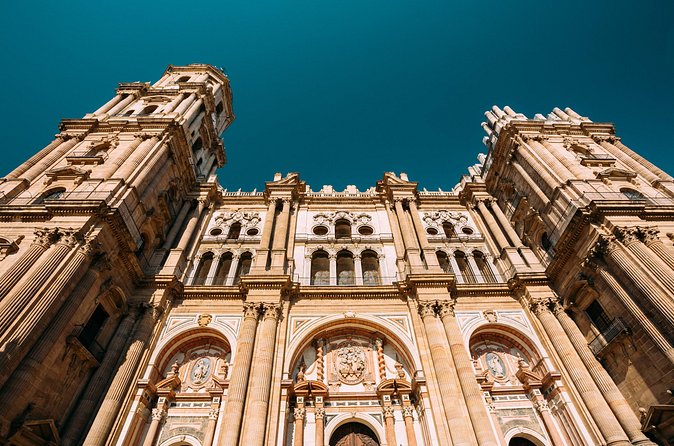
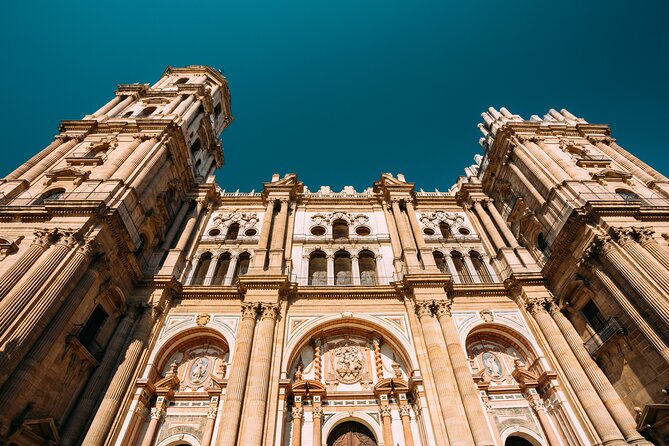
Now you step into one of Málaga’s most recognizable silhouettes, the cathedral nicknamed La Manquita because its south tower is unfinished. The name is famous, but the real draw is the contrast: ornate exterior lines and a soaring, detailed interior. The app framing here is useful because the highlights include things like ornate choir stalls and chapels, not just the big façade.
Just in front, Plaza del Obispo sits as a lively photo and people-watching spot with the colorful Baroque façade of the Episcopal Palace nearby. It’s also where the Diocesan Museum is located, so if you want more religious art and cultural insight, you’re positioned perfectly.
Next, you’ll reach a church founded in 1490, blending Gothic-Mudéjar and Baroque styles. A distinctive tower once belonged to a former mosque, which adds that layered city story you’re looking for in Málaga. Inside, the focus is on richly decorated religious statues and altarpieces.
Heads-up: church interiors can have controlled lighting and quiet rules. Move slowly, and give yourself a few extra minutes if you want to read details rather than just snapping photos.
Roman theater to Alcazaba: the hilltop story you came for
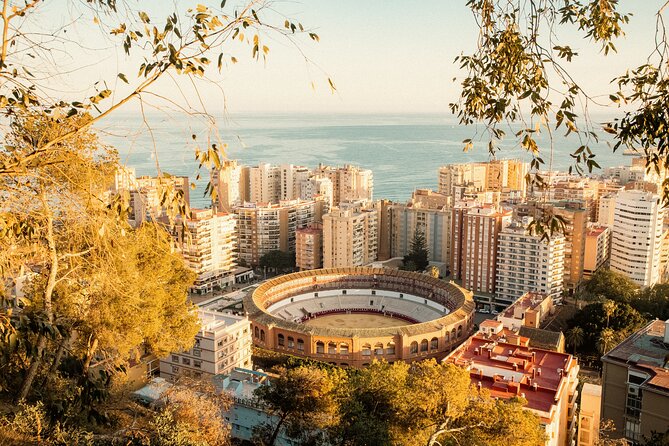
This is the section that many people end up remembering most. You’ll start at the Roman theater area, dating to the 1st century BC and described as the city’s oldest monument. You’ll also have a visitor center with archaeological displays, which helps if you want the quick background before walking through the site.
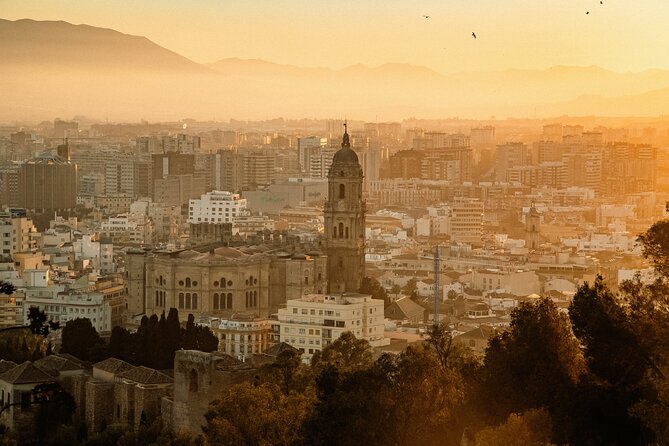
From there, you move to the Alcazaba, Málaga’s 11th-century Moorish fortress. It’s described as having lush gardens, courtyards, and defensive walls. The hilltop location is the real payoff because you start seeing Málaga’s layout and the port in a way you cannot get from street level.
What I like about pairing the Roman theater with the Alcazaba is that you’re not just “doing ruins.” You’re watching the city layer itself: Roman presence, Moorish fortification, then later additions. It makes the geography feel intentional, not accidental.
Gibralfaro Castle: best views, real effort

Above the Alcazaba sits Gibralfaro Castle, a 14th-century fortress built for defense. This is where the tour earns its keep because it gives you the best panoramic views over Málaga and the coastline.
There’s also a military museum inside, and you can walk ramparts to get the angles. The climb is the only part that can feel like work. If you’re sensitive to steep walking, plan on a slow pace, take your time for photos, and treat this as the moment to go easy.
The views are the reward, but the value is bigger than photos. This is where Málaga stops feeling like a set of attractions and starts feeling like one city built on hills for a reason.
Plaza de la Merced and Picasso’s birthplace: art with context in plain sight
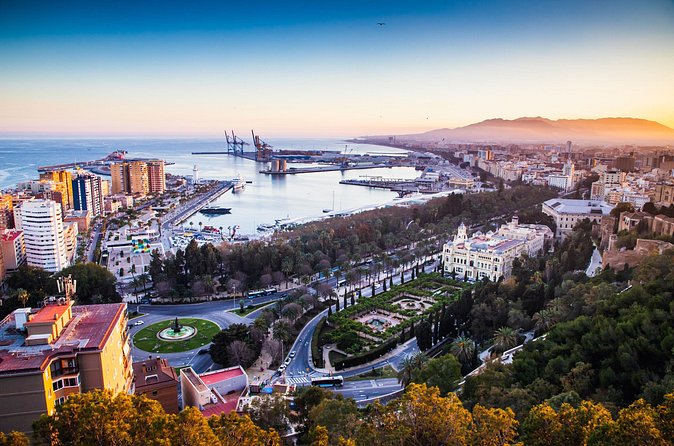
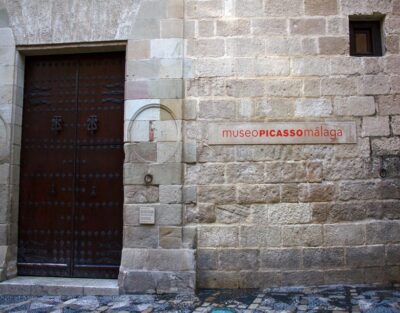
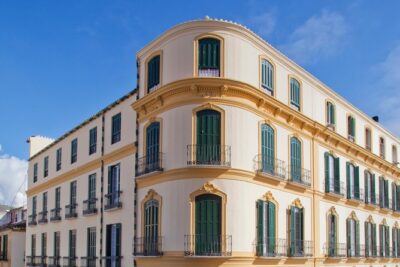
After the hilltop, you go back down into street life at Plaza de la Merced. The square has outdoor cafés and a central obelisk dedicated to General Torrijos. It’s also the area tied to Picasso’s birthplace, now a museum.
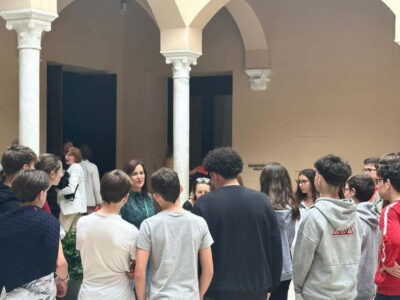
The museum is in a Renaissance palace and includes more than 200 works by Pablo Picasso across paintings, sculptures, ceramics, and drawings. The collection is described as tracing his artistic evolution, which is exactly what you want if you’re not trying to memorize a timeline. Even if you only catch a portion, you’ll still come away with a clearer sense of how his style changed over time.
If you’re an art lover, this is your “anchor museum” stop. If you’re not, you can still enjoy the location and use the square to cool down with a drink before heading toward the market.
Mercado Central de Atarazanas and Parque de Málaga: snack breaks that feel like local life
Then you hit Mercado Central de Atarazanas, a busy central market in a historic building with a striking stained-glass window and Moorish marble arch. Stalls are described as overflowing with fresh produce, seafood, and local delicacies.
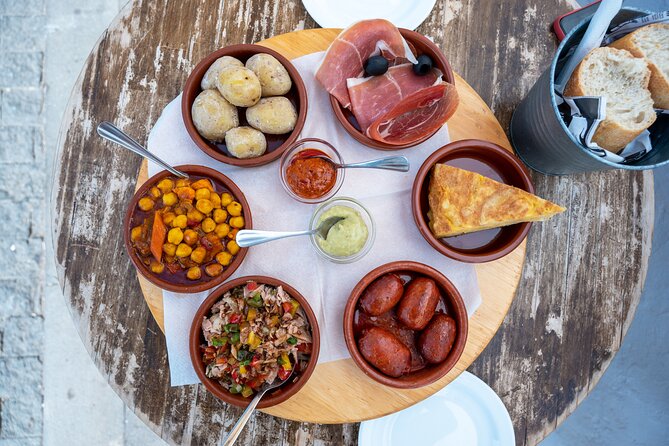
This is where you should slow down and actually use the tour’s structure. Markets are not just “one more stop.” They’re where you taste the city you’ve been viewing. If you’re unsure what to order, focus on simple options that showcase what’s fresh.
From the market, you head to Parque de Málaga, a Mediterranean park stretching from the city center toward the port. Expect shaded walkways, ornate fountains, sculptures, and tiled benches. This is your reset between heavy sightseeing and the final urban highlights.
Ayuntamiento de Málaga and Jardines de Pedro Luis Alonso: finishing gently
The tour ends in the area around Málaga’s Ayuntamiento, the neobaroque city hall. The building is surrounded by gardens and flowers, and the Fuente de las Tres Gracias adds a refined touch nearby. If you’re there when there’s activity around the plaza, you’ll get that “locals out and about” energy without needing an organized event.
Next comes Jardines de Pedro Luis Alonso, quieter landscaped gardens near the City Hall and Alcazaba. You’ll find flowerbeds, fountains, and shaded paths with views back toward the fortress area. It’s an ideal way to end because you’re not rushing to “the next big thing.” You can sit, regroup, and let the day settle.
Price and value: why this can be a bargain
The price is listed as $1.19 per person for a tour that takes about 6 hours, with a self-guided app and digital map included. That’s where the value comes from: you’re paying for structure, not for a bus or a guide.
But here’s the honest part. Since it’s self-guided and museum tickets are not included, your real cost depends on what you choose to enter. Some stops are free and many are outdoors, so you can absolutely do this route on a light budget. Still, if you plan to go inside several museums, think of the $1.19 as paying for navigation and context, not for admission.
When the app works, this tour shines
One review flagged a practical issue: the audio tour didn’t load, so they couldn’t use it. That’s a big deal for an audio-first experience. On the flip side, another note praised the app for giving a good foundation to discover the main sights, with special appreciation for the Roman portion.
So my advice is simple. Before you start, check that audio plays, load the map, and confirm you can navigate between stops. Keep your phone charged, and bring a power bank if you’re doing a full 6-hour walk.
If you do run into trouble, don’t panic. Most of the route is made of outdoor stops where you can still enjoy the streets, plazas, cathedral area, and viewpoints.
Who should book this self-guided Alcazaba to Picasso route
This tour is a strong fit if you want:
- A walkable route that strings together Picasso, Roman sights, Moorish fortifications, and the market
- A low-pressure way to explore in your own timing, with an app for guidance
- The kind of sightseeing where you want context, not just directions
It may be less ideal if:
- You rely on your phone for audio and you can’t risk app loading problems
- You want a fully guided explanation without any technology involved
- You dislike hills, since the Alcazaba and Gibralfaro sections involve real elevation
Should you book it
I’d book this if you’re the type who likes to follow a smart route and then spend extra time where you feel pulled in. The combination of Roman theater, Alcazaba, Gibralfaro views, cathedral area, and Picasso makes it easy to justify the walking.
I would hesitate only if you know your phone struggles with apps or you cannot guarantee audio will work. If you’re comfortable with a backup plan, like pausing to read signs and using offline navigation, then this route is a great value way to see Málaga beyond the obvious postcard angles.
FAQ
How long is the Alcazaba to Picasso self-guided tour?
It lasts about 6 hours.
What does the tour include?
You get a self-guided walking tour through an app and a digital map. A mobile ticket is also used.
Is the tour offered in English?
Yes, it is offered in English.
Are museum tickets included in the price?
Museum and attraction tickets are not included in the price.
Do I need private transportation or an in-person guide?
No private transportation is included, and there is no in-person guide. You explore independently with the app.
Can I cancel for a full refund?
Yes, you can cancel for a full refund up to 24 hours before the experience’s start time.
More Self-Guided Tours in Malaga
- Malaga: Centre Pompidou Malaga Ticket and City Audio Guide
★ 3.4 · 47 reviews - Malaga Historic Centre: Self-guided tour created by Official Guide
★ 4.5 · 26 reviews - Ronda Self-Guided Audio Tour with Andalucia Travel Expert
★ 4.5 · 26 reviews - Alcazaba Málaga : Self-guided tour created by Guía Oficial
★ 4.0 · 23 reviews
New arrivals around Malaga
- Malaga: group walking tour★ 5.0 · 1 review
- Andalusian Wine Tasting Tapas and DE wine tastings★ 5.0 · 1 review
- Malaga Moorish & Roman Heritage: Old Town, Alcazaba & Cathedral★ 4.0 · 1 review
- Marbella: Climb La Concha on Private Guided Hiking Trip★ 5.0 · 1 review
- Guided tour of Malaga fishing scene with cooking workshop★ 5.0 · 1 review
- Malaga: Explore Malaga on a Solar Scooter★ 5.0 · 1 review
Picasso Museum Tickets, compared.
Picasso Museum Guided Tour with Skip-the-Line Ticket
Read our review →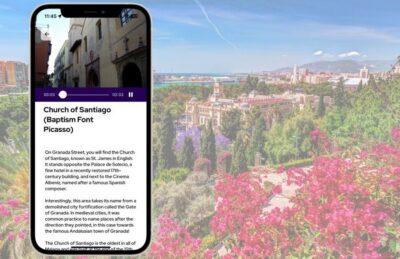
Picasso Birthplace Museum Ticket & City Audio Guide
Read our review →
Picasso Museum Tour with an Expert Art Guide for Small Groups
Read our review →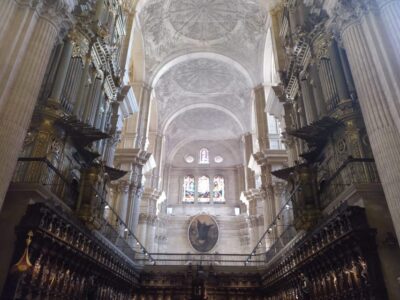
Old Tour Walking Tour w/Cathedral & Picasso Museum
Read our review →
Alcazaba, Picasso and more, walking tour with 5 VR experiences !
Read our review →Browse the lists this tour appears in