
Reviewed · RONDA EXCURSIONS
Guided Tour of Ronda
Ronda’s cliffs make every photo effortless. This private guided tour is a smart, 2-hour way to stitch together Ronda’s views, bridges, and local stories without feeling like you rushed. You get a native-style guide approach, timed stops, and a clear path from viewpoint to viewpoint so you can actually enjoy your day.
I especially like the photo rhythm, the way each stop is set up so you’re not just looking, you’re framing, comparing angles, and moving on before crowds steal the light. I also like the blend of scenery and human detail, from the century-old gardens to the bullring connections, and even the way the guide can steer attention to what matters. Guides like Juan, Manuel Aviles Bravo, Marta, Alfredo, and Elena are all noted for being friendly and helpful, and if you land with someone of that style, the tour feels personal fast.
One thing to keep in mind: it’s a tight schedule, so you will get short visits at each spot. Most stops are free to enter, but Palacio de Salvatierra has an admission ticket not included, so you may want to plan a little extra if you want that stop to be part of your must-dos.
In This Review
- Key things that make this Ronda tour worth it
- Entering Ronda fast, with a guide who sets the pace
- Is the $240.30 group price actually good value?
- Alamenda del Tajo: the garden with the big viewpoint payoff
- The New Bridge from multiple angles, plus the gorge context
- Bullring history near Ronda’s oldest ring, with Hemingway and Orson Welles in the mix
- Arco de Felipe V and the Church framed in stone
- Palacio de Salvatierra and the kind of facade details most people miss
- Plaza Duquesa de Parcent: the layers of Ronda’s public life
- El Campillo viewpoint at Plaza de María Auxiliadora, with far-off sights
- Iglesia de Nuestra Señora de La Paz and the color of Baroque detail
- Mirador de Aldehuela: the end view tying the whole route together
- What kind of travelers should book this?
- Book it or skip it? My practical take
- FAQ
- How long is the guided tour of Ronda?
- Is this a private tour?
- What language is the tour offered in?
- Where do I meet and where does the tour end?
- Do I need to pay for entry tickets during the tour?
- Is a mobile ticket used?
- Can I bring a service animal?
- When will I receive confirmation after booking?
- What is the cancellation policy?
- How far in advance is this typically booked?
Key things that make this Ronda tour worth it
- A private format for up to 15: One flat rate for your group, which usually means you get better value when you’re not traveling solo.
- Two hours with purposeful photo stops: You’ll see the New Bridge from multiple angles without turning it into a marathon.
- Top viewpoints in the same loop: Alamenda del Tajo, El Campillo, and Mirador de Aldehuela are built into the route.
- Stories beyond the postcard: Bullfighting history, plus Ronda’s famous literary and film connections, add texture.
- Most entries are free: Only one named stop has admission not included, so you can budget with less guesswork.
Entering Ronda fast, with a guide who sets the pace
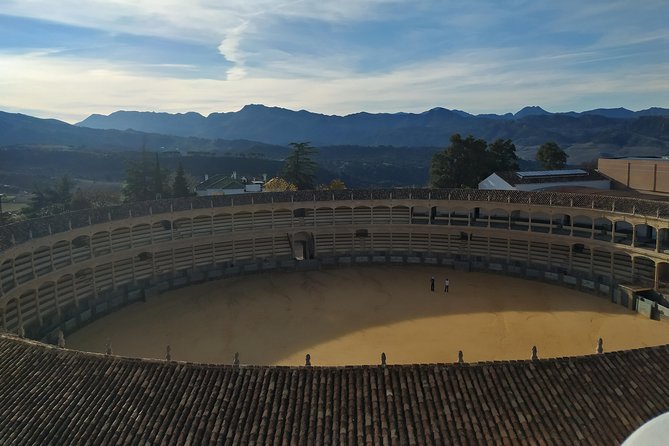
Ronda looks like it belongs in a movie. The gorge, the bridges, the way buildings hug the edges, it all feels dramatic before you even start walking. The big win here is that you do not need to figure out the best order. Your guide keeps the pace realistic for a short, 2-hour window and points you toward the spots that make the city click.
This is offered in English, and it’s a private tour, meaning only your group is participating. That matters because you can ask questions without feeling like you’re interrupting a busload of people. It also helps if your group has different interests, like photos first versus history first.
One more practical note: the tour uses a mobile ticket, so you should be set once you have your confirmation. The start point is Pl. de la Merced, 1, 29400 Ronda, Málaga, Spain, and it ends in the area where you’ll find lots of restaurants, near Pl. España. That end point is handy if you want to keep the momentum going after the walk.
Other runs up to Ronda and its gorge:
Is the $240.30 group price actually good value?
At $240.30 per group (up to 15), the value depends on your group size. For a small family or two people, it is simply pricier than a public tour. For a group of friends, a shared flat rate becomes a bargain because the guide still gives you the full private treatment.
The tour runs about 2 hours, which also affects value. You’re buying time that would otherwise be spent planning, deciding where to go, and double-checking how long each viewpoint takes. If you only have a limited window in Ronda, this kind of guided route can save you from the classic mistake of hopping from place to place and enjoying almost none of them.
One detail I like: the tour is described as having flexible timings, which usually means you’re not locked into feeling rushed every minute. In practice, it helps you match your pace to your group, and it makes photos less stressful.
Alamenda del Tajo: the garden with the big viewpoint payoff
The tour starts with Alamenda del Tajo, described as one of Ronda’s most beautiful parks, with gardens that are 200 years old. This is not just a scenic stroll. It’s a viewpoint strategy.
Your guide will take you to spots where you get broad gorge views. That matters because in Ronda the geometry tells the story. From here, you can start to understand how the bridges relate to each other and why the city is so famous for dramatic angles.
A short stop like this is perfect if you want a strong “first impression” without losing half your morning. You’ll probably get plenty of photo moments, and you should treat this as the place to reset your camera settings. Look around, identify the bridge lines, then keep those framing ideas in your head for the next stops.
The New Bridge from multiple angles, plus the gorge context
Ronda’s most famous image is the New Bridge, completed in 1793, and this tour does something smart: it does not make you see it once and move on. You observe it from several different angles to check its beauty.
This is where having a guide helps, even if you’re pretty independent. Guides tend to know where you can stand to reduce distractions, and they know how to point your attention at details you might miss from the street. You’re also walking in a route that naturally builds context, so the bridge does not feel like a random monument.
Right after, you head to Jardines de Cuenca, the hanging gardens designed for one of the most sought-after photos: the New Bridge tucked into the gorge view. This stop is also a visual education. From the garden outlook, you can understand how the gorge creates depth and why the bridge looks so tall in photos even when you are not standing that far away.
At Jardines de Cuenca, your guide also connects what you’re seeing to nearby landmarks, including the House of the Moorish King and the Old Bridge. Even if you do not have time to tour everything, seeing these elements framed together gives your brain the bigger picture.
If you love photography, this portion is a highlight. If you do not, it still works because it keeps the walk interesting and makes the gorge feel understandable, not just dramatic.
A few other Andalusian days to consider
- Málaga: Alcazaba and Roman Theatre Guided Tour With Entry
★ 4.8 · 5,792 reviews - From Málaga: Caminito del Rey Day Trip & Guided Tour
★ 4.8 · 4,683 reviews - Malaga Wine & Tapas Small Group Guided Tour
★ 5.0 · 1,972 reviews - Alcazaba Malaga Guided Tour
★ 5.0 · 1,457 reviews - Málaga: Roman Theatre and Alcazaba Guided Tour
★ 4.5 · 1,219 reviews
Bullring history near Ronda’s oldest ring, with Hemingway and Orson Welles in the mix
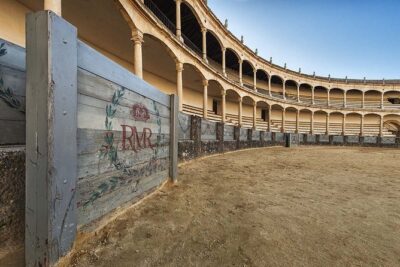
Next up is the bullring area, in the surroundings of what’s described as the oldest bullring in Spain. Even if you have mixed feelings about bullfighting, I find the historical angle worth hearing, because it’s part of how Ronda became culturally important.
This stop is framed around the story of modern bullfighting and how Ronda drew famous people. The tour mentions characters like Orson Welles and Ernest Hemingway, and the way the guide presents the connections can turn the bullring setting into more than a photo backdrop.
Practical takeaway: if your group has strong opinions, you can still enjoy this. Focus on the architecture of the arena, the setting, and the idea of how a place becomes a magnet for writers and filmmakers. That’s what makes it travel, not just sightseeing.
Arco de Felipe V and the Church framed in stone
Ronda has plenty of eye candy, but this stop is more specific: Arco de Felipe V is described as the entrance to Ronda through the Old Bridge, with a door built in the 16th century. The tour is short here, but that is the point.
Your guide will help you position your camera so you can photograph the Church of Father Jesus framed by the arch. That framing idea is the real value, because arches change how you see. They create a natural “viewfinder” and make your photo composition easier.
Short stop means you get the payoff without losing time. Just make sure you’re ready to pause quickly, because the best framing spots can fill up when the flow of pedestrians picks up.
Palacio de Salvatierra and the kind of facade details most people miss
Then you reach Palacio de Salvatierra, known for its 18th-century facade. The tour points out architectural elements like the forge, the wooden cover, the noble shield, and colonial elements.
This is one of those moments where a guide earns their pay. If you walk past this on your own, you might notice it’s pretty. With a guide, you get to understand what you’re seeing, and why that facade matters in the story of Ronda.
Important budgeting note: admission ticket for Palacio de Salvatierra is noted as not included. If you care about stepping inside, plan on paying separately. If you do not, you can still enjoy the facade and keep your day moving.
Plaza Duquesa de Parcent: the layers of Ronda’s public life
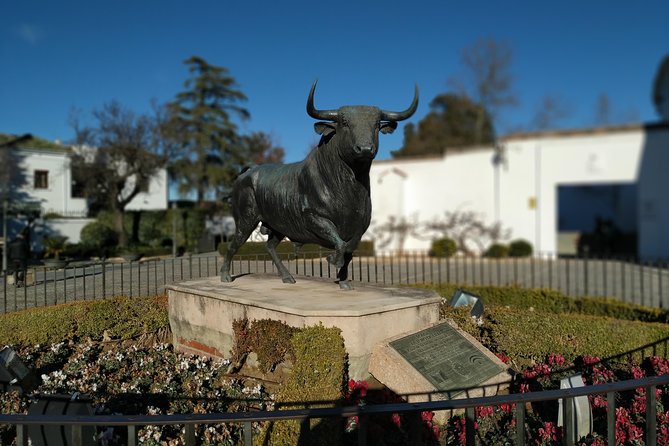
Plaza Duquesa de Parcent is described as the most important square in Ronda, and it’s built around an archaeological angle. The tour notes that key archaeological remains have been found there, and that three Catholic churches point to the importance of the place.
Two landmarks get called out: the City Hall and the Church of Santa María de la Encarnación. This stop is valuable because it shows how Ronda works beyond its dramatic gorge views. You get a sense of the city as a living civic hub, not just a viewpoint gallery.
If your group likes history but also likes not getting stuck in museums, this square stop is a nice middle ground. You see the symbols, you learn what to look for, then you keep walking.
El Campillo viewpoint at Plaza de María Auxiliadora, with far-off sights
At Plaza de María Auxiliadora, also known as El Campillo, you get another prime viewpoint. From here you can enjoy impressive views, including Sierra de Grazalema, Hoya del Tajo, and the Archaeological Site of Acinipo (all mentioned as visible from this area).
There’s also a nature angle: the gardens have two Pinsapos of interest. Pinsapos are tied to this region’s character, and if you like seeing how local environment shows up in gardens and parks, you will enjoy that detail.
This stop tends to be a favorite because you step from the tight gorge focus into a wider horizon. It’s the kind of moment that helps you breathe, regroup, and take photos that feel different from the New Bridge close-ups.
Iglesia de Nuestra Señora de La Paz and the color of Baroque detail
Another short but memorable stop is Iglesia de Nuestra Senora de La Paz. The tour highlights a colorful facade and baroque decoration inside, describing it as one of Ronda’s most beautiful corners.
The church is tied to Ronda’s identity through the Virgin of the Paza, named as the patroness of Ronda. That matters because it adds meaning. You’re not just looking at decoration, you’re learning what the decoration represents in local culture.
If your group prefers outdoors, this is still worth it because churches in Ronda can feel like a pause in the vertical chaos. It’s a small reset before your final viewpoint.
Mirador de Aldehuela: the end view tying the whole route together
To wrap up, you stop at Mirador de Aldehuela to end the visit. This viewpoint is described as showing the New Bridge, the Old Bridge, the Gardens of Cuenca, and the Casa del Rey Moro, with Plaza de España as the finishing point.
This is a good finish because it re-stitches everything you’ve seen. Earlier, you got close and angled. Now you step back and see how all the parts relate.
The tour ends in the area where most of the restaurants are, which is ideal. You can walk straight from the viewpoint into a meal without needing extra navigation. If you want to keep your momentum, this is where you do it.
What kind of travelers should book this?
This tour is a strong fit for:
- Groups up to 15 who want private guiding value
- People with limited time in Ronda who still want the key stops
- Photo-focused visitors who like structured viewpoint stops
- History lovers who want stories mixed into the walk, not separated into lectures
It might be less ideal if:
- You want long, slow exploring at each site. This is built for a short, efficient loop.
- Your group plans to spend lots of time inside multiple buildings, since one key stop has admission not included and most others are brief.
In other words, this is a get-your-bearings-fast tour. You leave with a clear sense of what Ronda is famous for, and you can decide what to revisit on your own later.
Book it or skip it? My practical take
I think you should book this tour if you want Ronda’s highlights in a compact, guided format, especially if you are traveling with a group. The flat rate up to 15 makes the math work, and the route is designed to keep you at the viewpoints long enough to get photos without turning it into a long day.
Skip it if your group is mostly independent and you already know you will spend hours wandering on your own. Also consider skipping or shortening plans if you hate quick stops, because several entries are brief by design.
If you do book, show up early enough to start calmly at Pl. de la Merced, 1. Bring comfortable shoes. And if you care about photos, keep an eye on how your guide positions you, because the best shots here come from angle, not from rushing.
FAQ
How long is the guided tour of Ronda?
The tour lasts about 2 hours.
Is this a private tour?
Yes, it is private. Only your group will participate.
What language is the tour offered in?
The tour is offered in English.
Where do I meet and where does the tour end?
You start at Pl. de la Merced, 1, 29400 Ronda, Málaga, Spain. You finish in the area near restaurants, at Busto de Antonio Ríos Rosas, Pl. España, 6, 4, 29400 Ronda.
Do I need to pay for entry tickets during the tour?
Most stops are listed as free admission. Palacio de Salvatierra has an admission ticket not included.
Is a mobile ticket used?
Yes, the tour includes a mobile ticket.
Can I bring a service animal?
Yes, service animals are allowed.
When will I receive confirmation after booking?
Confirmation will be received at the time of booking.
What is the cancellation policy?
You can cancel for a full refund if you cancel up to 24 hours in advance of the experience’s start time.
How far in advance is this typically booked?
On average, this tour is booked 40 days in advance.
New arrivals around Malaga
- Malaga: group walking tour★ 5.0 · 1 review
- Andalusian Wine Tasting Tapas and DE wine tastings★ 5.0 · 1 review
- Guided tour of Malaga fishing scene with cooking workshop★ 5.0 · 1 review
- Malaga Moorish & Roman Heritage: Old Town, Alcazaba & Cathedral★ 4.0 · 1 review
- Marbella: Climb La Concha on Private Guided Hiking Trip★ 5.0 · 1 review
- Malaga: Explore Malaga on a Solar Scooter★ 5.0 · 1 review
Ronda Excursions, compared.
Ronda and Setenil Tour with Free Time and Map from Málaga
Read our review →
Ronda+Setenil de las Bodegas with Little Train
Read our review →
Ronda and Setenil de las Bodegas tour from Malaga
Read our review →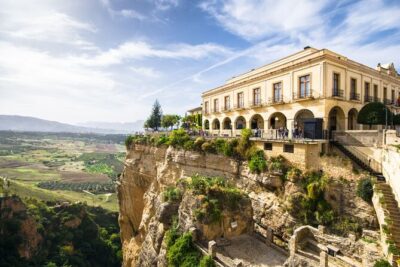
Browse the lists this tour appears in