
Reviewed · GUIDED CITY WALKS
Malaga Private Walking Tour with a Professional Guide
Malaga’s Old Town reads like a history book. In a compact 2-hour private walk, you’ll connect major sites from the Phoenician colony of Malaka through Moorish rule, modern Malaga, and the legacy of Pablo Picasso.
What I like most is the way the route stitches art, religion, and power into one story, starting with big civic and cathedral landmarks and ending with the city’s political face at the Ayuntamiento. You also get a guide who is with just your group, which makes it easier to ask questions and get clarification in real time.
One possible drawback: the single available review notes that while the guide was very kind, the tour information felt average and there were occasional gaps in naming certain points of interest. If you want deep, precise facts at every stop, you may want to communicate that upfront.
In This Review
- Key Highlights You Should Know
- Following Malaga’s Layers, Block by Block
- Price and What You Get for a Private 2-Hour Walk
- The Start at Plaza del Obispo, Where the Route Makes Sense
- Catedral de Málaga and the Church-Over-Church Story
- Plaza y Acera de La Marina: A Local Street-Edge Perspective
- Mercado de Atarazanas: Where Malaga’s “Here and Now” Shows Up
- Churches at a Walkable Pace: San Juan Bautista, Sagrado Corazón, Mártires
- Plaza de la Constitución: The Civic Center Mood
- Museo Picasso Málaga: Art as a Time Marker
- Teatro Romano and Alcazaba: Power on Display
- Ayuntamiento de Málaga: The Modern City’s Face
- The Timeline Story You’ll Hear, and Why It Works on Foot
- Private Guide Dynamics: Comfort and a Clear Expectation Test
- Practical Notes That Affect Your Experience
- Who This Tour Fits Best
- Should You Book This Private Walking Tour of Malaga?
- FAQ
- How long is the Malaga Private Walking Tour?
- What is the price for this tour?
- Is this tour private or shared?
- What language is the tour offered in?
- Where does the tour start and end?
- What is included in the tour price?
- Are entrance fees included?
Key Highlights You Should Know
- A true private group experience with a local guide only for your party (up to 15 max)
- Mobile ticket format for easier access on the day
- Major landmarks in a tight loop, including Teatro Romano and Alcazaba
- Religious architecture across eras, from Visigoth and Byzantine periods to later Christian churches
- Picasso and the modern city, with Museo Picasso Málaga included
- Room for on-the-spot customizing, if your guide can tailor the pace or focus
Following Malaga’s Layers, Block by Block
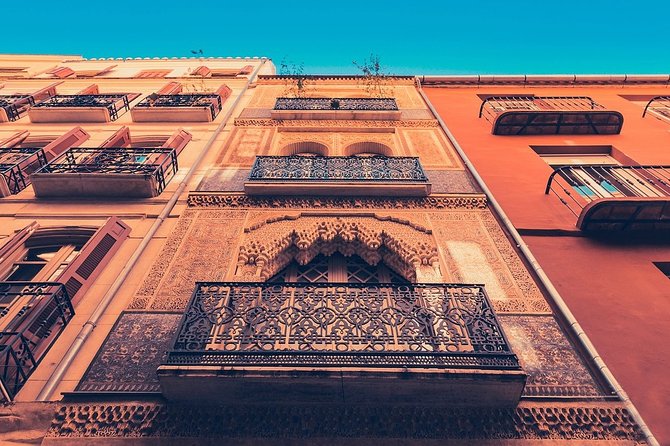
Malaga is one of those cities where the past is not behind glass. It’s in the street plan, the churches built on older foundations, the hills that still show where power sat, and the public squares that keep pulling you back to the civic center.
This tour is built around that idea. You move through the heart of the city and pick up a timeline as you go, starting at Plaza del Obispo and working your way through the area around Catedral de Málaga and Plaza y Acera de La Marina. Then you shift toward markets and churches, and later climb into the sights that explain why people kept fighting over Malaga in the first place.
The value here is not that you get one museum stop. You get a chain reaction of meaning. Even without paying for entrances, each exterior stop helps you understand what the next stop is trying to tell you.
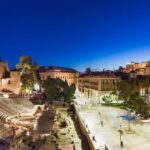
More of the old centre crossed on foot:

Price and What You Get for a Private 2-Hour Walk
At $288.95 per group (up to 15 people) for about 2 hours, this is priced like a private guided experience rather than a budget group tour. The upside is flexibility: your guide can work with your group pace, questions, and interests.
For value, the key question is this: will your guide help you connect the dots? The tour’s subject list is ambitious, covering big eras and turning points like Moorish conquest, the Nasrid Kingdom of Malaga, the Catholic conquest under Isabella and Ferdinand, and the 20th century story that includes Pablo Picasso and Franco’s dictatorship. If the guide delivers that with clarity, you’ll feel like you got your money’s worth quickly.
Here’s the other side of the coin. Because entrance fees are not included, you should expect to spend most time on outdoor views and exterior context unless your guide chooses to pause for optional entry. Also, there’s only one review on record, and it was mixed.
The Start at Plaza del Obispo, Where the Route Makes Sense
The meeting point is Plaza del Obispo (Distrito Centro). It’s a practical location because it places you right near the city center landmarks you’ll see next, including the cathedral area.
Starting here matters for two reasons. First, the cathedral zone helps you establish a visual anchor early, so you’re not just walking through unrelated streets. Second, it sets up a cultural shift you’ll feel throughout the walk, from the weight of Christian institutions to the deeper timeline of Phoenicians, Romans, and Moors.
If you like tours that help you orient fast, you’ll likely appreciate this start. You can also keep the pacing in mind: a 2-hour tour moves quickly, so arrive a few minutes early and be ready to walk.
Catedral de Málaga and the Church-Over-Church Story
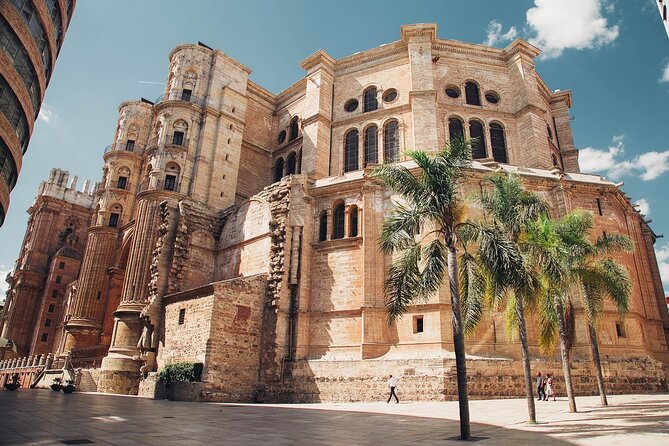
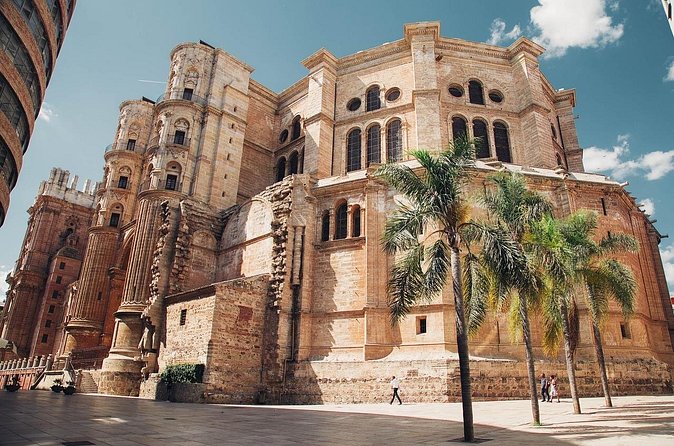
You’ll see Catedral de Málaga early, and it’s a smart first stop. Big churches in Spain often function like city anchors, and here that role supports the tour’s bigger theme: layers of rule and culture.
Even though this tour does not promise entrances as included, standing near the cathedral gives you a sense of how the city’s identity centers on monumental religious and civic architecture. It also helps you understand why the tour connects earlier historical periods to later Christian rule, including the arrival of the Visigoths and the shift into later Christian dominance after the Catholic conquest.
What you can do: look at how the cathedral area sits relative to the surrounding streets and plazas. When a route places a landmark like this at the beginning, it is usually because the guide wants you to mentally map the center before moving outward.
A few other Andalusian days to consider
- Malaga: Private City Tour by Eco Tuk Tuk
★ 4.9 · 1,319 reviews - Malaga Expert Tour with Local Guide in Eco Tuk Tuk Private
★ 5.0 · 533 reviews - Málaga: Private Sightseeing Treasure Hunt
★ 4.8 · 297 reviews - Malaga Welcome Tour with Local Guide in Eco Tuk Tuk Private
★ 5.0 · 271 reviews - Málaga 2-Hour TukTuki Tour: Private Experience
★ 4.4 · 266 reviews
Plaza y Acera de La Marina: A Local Street-Edge Perspective
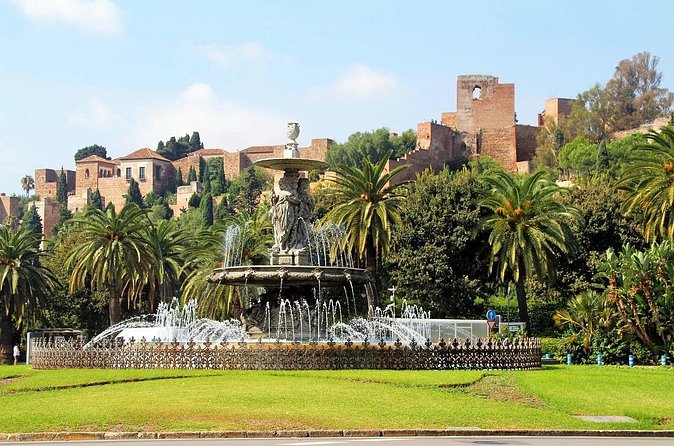
Next you’ll head to Plaza y Acera de La Marina. This stop works well because it’s not just about a single monument. It’s about how public space shapes daily movement.
This is where the tour’s story starts to feel like real city life. The tour isn’t only ancient history trivia. It also frames Malaga as a living city that has been ruled and reshaped by changing powers over and over.
If you enjoy walking tours that balance story with everyday atmosphere, this is a good mid-first-half stop. It’s the kind of place where you can mentally shift from history eras to the practical question, where do people gather, and how does that influence the feel of the city?
Mercado de Atarazanas: Where Malaga’s “Here and Now” Shows Up
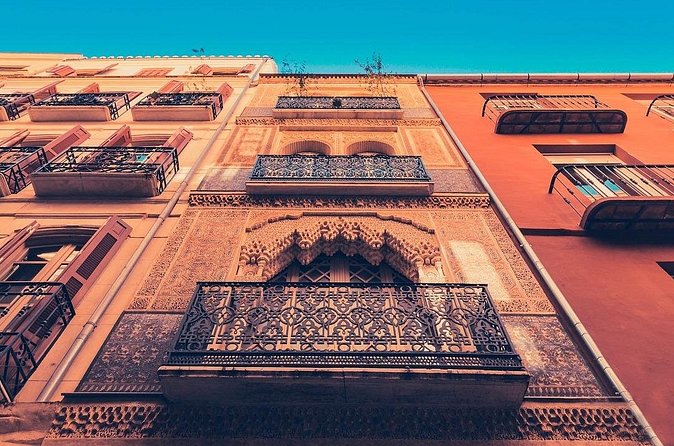
Mercado de Atarazanas is included, and I like that. Markets bring you back to the present, and they give context for why cities grow where they do.
Even without assuming details about what you’ll find inside, a covered market is a visual clue: Malaga has always been about trade and movement, which connects neatly with the tour’s earlier references to a Phoenician colony and later hegemony conflicts involving Carthage.
This stop can also be useful if you want a break in the walking rhythm. Markets give you a chance to slow down, look around, and absorb the city without staring at stone alone.
Churches at a Walkable Pace: San Juan Bautista, Sagrado Corazón, Mártires
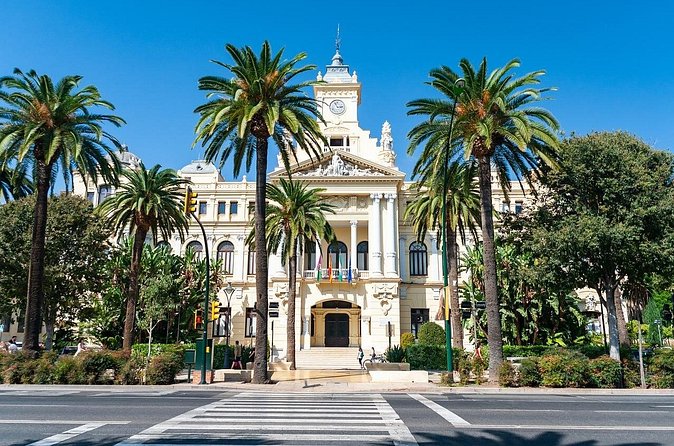
You’ll see three church stops spread across the route: Iglesia de San Juan Bautista, Iglesia del Sagrado Corazón, and Iglesia de los Mártires. The interesting part is not just that churches are beautiful. It’s that they show how religious life reappears in different forms after political upheaval.
This fits the tour’s timeline. You’ll hear about shifts from Roman rule to Visigoth arrivals, Byzantine rule, and later Moorish conquest and domain. After that, the story moves into the Taifa of Malaga and the Nasrid Kingdom of Malaga, then the conquest under Isabella and Ferdinand.
When a walking tour includes multiple church stops, it’s often trying to teach you that “what you see now” is a result of what survived and what replaced it. If your guide can explain that link clearly, these churches become more than photo stops.
One caution based on the mixed review: if you’re the type who cares about exact names and specific facts at each church, keep your expectations realistic. You can help by asking at the stop, What era is most connected to this site? or What should I pay attention to here?
Plaza de la Constitución: The Civic Center Mood
Plaza de la Constitución is another included stop. Plazas are the stage set for civic identity, and that matches the tour’s shift into more modern themes.
This is also a natural place for a guide to connect past to present. The tour’s learning points include social and political unrest in the 19th century, the industrial revolution, the Spanish civil war, and then Franco’s dictatorship and later democracy and the modern city.
In other words, the tour isn’t only ancient. It’s also about how Malaga becomes itself in the 1800s and 1900s. If your guide gives even brief context at the right places, this plaza can help the storyline feel grounded instead of like separate lectures.
Museo Picasso Málaga: Art as a Time Marker
Museo Picasso Málaga is on the itinerary, and that inclusion is a smart choice. Picasso is not just a famous name. In Malaga, he acts as a bridge between the city’s identity and its 20th century storyline, which is exactly one of the tour’s learning points.
I like that the museum stop is part of a broader walking route. You are not just walking from one attraction to another. You’re moving through the conditions that shape a place, then landing on an artistic reference point that helps you understand how Malaga presents itself.
Because entrances are not included, expect the experience to focus on context, location, and interpretation rather than a full museum visit unless your guide chooses to help you plan something on your own. If you’re a museum-first person, you may treat this as a “taster” and plan a longer visit separately later.
Teatro Romano and Alcazaba: Power on Display
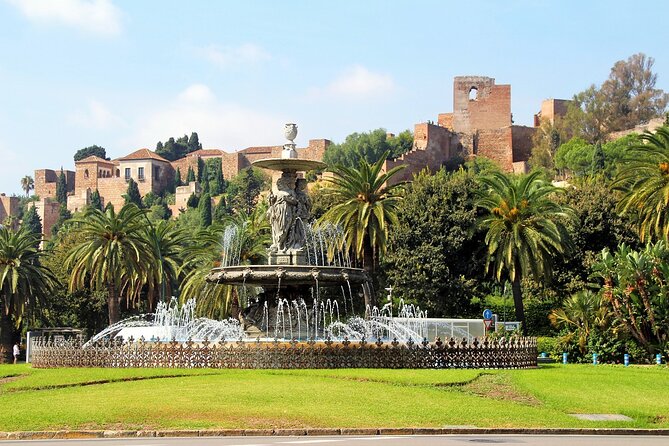
Teatro Romano is included, and then the tour moves to Alcazaba de Málaga. Together these stops explain a lot about why Malaga was constantly contested.
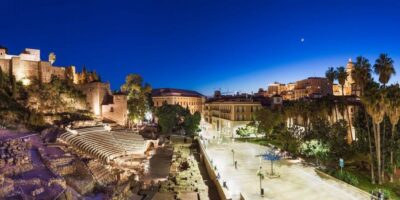
A Roman theater signals cultural authority, where public life and entertainment met political power. When a guide connects that to Roman rule and earlier eras like Phoenician colonization and Carthage rivalry, you start to see the city as a strategic prize, not just a pretty port town.
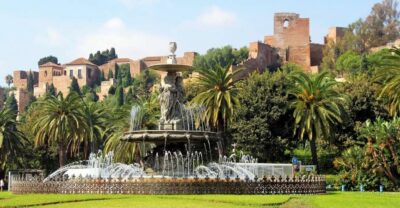
Then comes Alcazaba de Málaga. A fortress hill tells you immediately where defense mattered and where rulers could control movement. This stop aligns perfectly with the tour’s theme of Moorish conquest and domain, the Taifa of Malaga, and the Nasrid Kingdom of Malaga.
If you want a “wow” moment that also makes historical sense, this pairing is it. You’re going from performance space to defensive space, and that contrast helps the story stick.
Ayuntamiento de Málaga: The Modern City’s Face
The walk ends back at the meeting area, but you’ll also see Ayuntamiento de Málaga on the way. That matters because the tour’s learning points include the growth of a modern democratic city.
City halls represent more than architecture. They symbolize legitimacy, governance, and the public square’s role in daily life. If your guide ties this stop to the later 19th century shifts, the Spanish civil war, and Franco’s dictatorship, you’ll finish with a clear thread into the present.
Even if you’re not a government history person, ending with a civic landmark helps you process what you learned. You have been traveling across centuries, and you end at a place that says this is how power and public identity look now.
The Timeline Story You’ll Hear, and Why It Works on Foot
The tour promises that you’ll learn why Malaga is one of the oldest cities in the world, plus several named historical threads: the Bastetani, the Phoenician colony of Malaka, the hegemony of Carthage, Roman rule, Visigoths, Byzantine rule, Moorish conquest and domain, the Taifa of Malaga, the Muslim Nasrid Kingdom of Malaga, the conquest of Malaga by Isabella and Ferdinand, and then the 19th century unrest, industrial revolution, Spanish civil war, Pablo Picasso, Franco’s dictatorship, and democracy and the modern city.
That is a lot for two hours. So here’s how to judge it as a smart reader.
You should expect the guide to pick key moments and connect them to the visuals you see. If they do that, the stops become a set of anchors, and the names you hear become understandable, not just memorized.
If they do not, the tour can feel like an outline delivered quickly. That’s exactly the concern raised in the one review on record. The reviewer described the tour as quite average from an information standpoint, and mentioned the guide was not always sure of point-of-interest names.
So you can protect yourself with one simple strategy: plan to ask one clarifying question early in the walk. For example, ask how the tour will connect Phoenician Malaka to what you’re seeing now. If the guide answers confidently and uses the landmarks you’re looking at, you’re in good shape.
Private Guide Dynamics: Comfort and a Clear Expectation Test
This is a private tour. Only your group participates, and a local guide stays with you. The guide can also customize the tour on the spot.
This is great when you have specific interests, like leaning more toward ancient periods, more toward Picasso, or more toward the Moorish layers. It’s also great for families or mixed-age groups because you can adjust pace without the stress of a large public group schedule.
But with one available review showing mixed satisfaction, I’d treat this as a “professional guide, with a check-in moment” situation. You want to know whether your guide is comfortable naming sites and explaining them clearly.
If you care about accuracy, ask your guide early, What are the top three eras you’ll focus on today? A confident response usually signals a stronger tour delivery.
Practical Notes That Affect Your Experience
A few details matter for how this feels on the ground.
- Entrance fees are not included. If you want to go inside any major sites, you may need to plan those separately.
- It’s offered in English and uses a mobile ticket.
- The tour is about 2 hours, so it will likely be an efficient route with minimal lingering.
- It’s priced per group, up to 15, which means the experience can stay manageable, but it won’t be slow and contemplative.
Also, confirmation is received at booking, free cancellation is available up to 24 hours in advance, and service animals are allowed. It’s near public transportation, which helps if you want to pair the tour with an after-dinner stroll or a museum visit later.
Who This Tour Fits Best
This is a strong fit if you:
- want a guided orientation to central Malaga fast
- like history that connects to what you can see outside
- enjoy walking tours where art and politics show up, not just architecture
- are comfortable doing optional deeper visits on your own, since entrance fees are not included
It may be less ideal if you:
- need museum-grade detail at every stop within two hours
- expect the guide to be an encyclopedia on every single name and fact
- dislike churches, because three church stops are part of the route
Should You Book This Private Walking Tour of Malaga?
I’d book it if your goal is to get your bearings fast and learn how Malaga’s big eras relate to real landmarks. The private format helps, and the route hits key markers like Catedral de Málaga, Teatro Romano, Alcazaba, and Museo Picasso Málaga, so you finish with a mental map and a timeline you can carry into the rest of your day.
I would hesitate if you want maximum depth and precision on every stop. The only review on record was not impressed with the information level, even while calling the guide lovely. Since you can customize on the spot, you can reduce that risk by asking what the guide will cover most, and by paying attention to how confidently they connect the story to what you’re standing in front of.
If you book, go in with a good mindset: think of this as a history tour on the move. Then, if anything pulls you in, plan a longer visit to the museum or a deeper stop afterward. That’s the best way to turn two hours of orientation into a fuller Malaga day.
FAQ
How long is the Malaga Private Walking Tour?
The tour lasts about 2 hours.
What is the price for this tour?
It costs $288.95 per group, up to 15 people.
Is this tour private or shared?
This is a private tour. Only your group participates.
What language is the tour offered in?
The tour is offered in English.
Where does the tour start and end?
It starts at Plaza del Obispo, Distrito Centro, 29015 Málaga, Spain, and it ends back at the meeting point.
What is included in the tour price?
Included is a local guide with your group only, a private guided tour, and possible customizing on the spot.
Are entrance fees included?
No. Entrance fees are not included.
New arrivals around Malaga
- Malaga: group walking tour★ 5.0 · 1 review
- Andalusian Wine Tasting Tapas and DE wine tastings★ 5.0 · 1 review
- Guided tour of Malaga fishing scene with cooking workshop★ 5.0 · 1 review
- Malaga Moorish & Roman Heritage: Old Town, Alcazaba & Cathedral★ 4.0 · 1 review
- Marbella: Climb La Concha on Private Guided Hiking Trip★ 5.0 · 1 review
- Malaga: Explore Malaga on a Solar Scooter★ 5.0 · 1 review
Guided City Walks, compared.

Cathedral, Alcazaba, Roman Theater Walking Tour
Read our review →
Malaga Private Walking Tour, Alcazaba & Catamaran Cruise
Read our review →

Guided Walking Tour of the Old Town of Frigiliana
Read our review →Malaga Private Walking Tour, Alcazaba & Catamaran Cruise
Read our review →
Browse the lists this tour appears in