
Reviewed · RONDA EXCURSIONS
Ronda Old Town Walking Tour with Audioguide on Your Smartphone
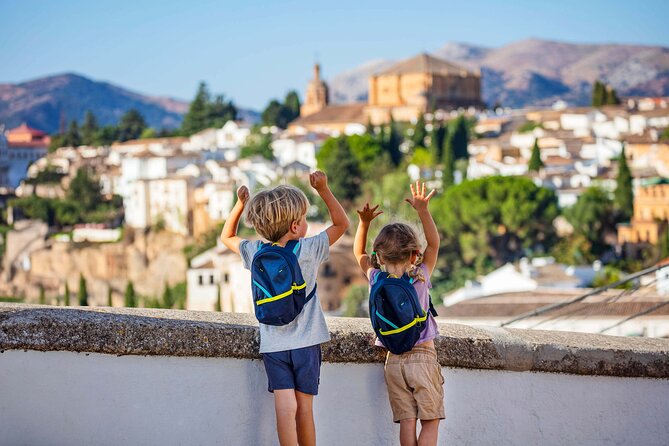
Ronda hits you with views fast. This self-guided smartphone audioguide walk strings together Ronda Old Town highlights across the gorge area in about 90 minutes, with 21 historian-narrated stops you control at your own pace.
I like that it is a low-cost way to learn as you walk, plus you get the structure to find the right spots without a guide hovering over you.
I love two things in particular: the price at $6.73 per person, and the fact that the app includes an offline map with an on-screen route so you can follow along in the streets.
It is an easy format for a day trip when you want value and flexibility.
One consideration: you need to bring your own headphones, and you should plan a few minutes to download, activate, and test the audio before you start.
Also, the walk may not finish exactly where you parked, even if it is designed to end back at the meeting area.
In This Review
- Key reasons to do this Ronda Old Town audio walk
- How the smartphone audioguide works in Ronda, start to finish
- Plaza del Socorro: your anchor point and the little details to watch for
- Balcón del Coño and the gorge edge you feel in your stomach
- Puente Nuevo: why the New Bridge deserves the hype
- Mirador de Aldehuela: engineer-named views with quieter payoff
- Spain Square and the Royal Cavalry bullring: a stop that ties viewpoints together
- Puente Viejo: the older bridge that makes the whole walk make sense
- Palacio de Mondragón and Santa María la Mayor: Moorish to Christian, visible in stone
- San Sebastián minaret and Arab Baths: the Moorish thread stays consistent
- Casa del Rey Moro and Puerta de Almocábar: legends, engineering, and a fortified gate
- Lara Museum and Casa Museo Don Bosco: curious detours for when you want more than views
- Pacing the walk: how to fit 90 minutes into real time
- Value check: $6.73 for 21 historian recordings and free-to-follow stops
- Who this self-guided Ronda Old Town tour is best for
- Should you book this Ronda Old Town smartphone audio tour?
- FAQ
- What is the duration of the Ronda Old Town walking tour with audioguide?
- How much does the tour cost?
- What language is the audio guide available in?
- Do I need an internet connection during the tour?
- Do I need headphones?
- Is there a human guide meeting me at Plaza del Socorro?
- Where does the tour start?
- Where does the tour end?
- Are there entrance fees included for stops on the route?
- What is the cancellation policy?
Key reasons to do this Ronda Old Town audio walk
- Smartphone audioguide with 21 professional historian recordings so you learn as you go
- Offline map and GPS route for easier navigation in the old streets
- Free-to-follow route with no required entry fees for the tour itself
- Iconic gorge viewpoints like Balcón del Coño and Puente Nuevo, plus the Old Bridge (Puente Viejo)
- Small-tour feel even though it is self-guided, with a max of 20 travelers
How the smartphone audioguide works in Ronda, start to finish
This tour is self-guided, which means there is no human guide at Plaza del Socorro. Your job is simple: download the TouringBee audio guide app, activate your purchase, then follow the route on the mobile map.
You get a mobile ticket, and the app pairs the route with illustrations to help you spot the landmarks quickly. There are also 21 audio recordings narrated by a professional historian, plus offline access with a route map for GPS navigation. That matters in Ronda because you will be moving between viewpoints and historic corners where cell signal can be spotty.
Bring your own headphones. The tour data does not include them, and you will feel every minute you spend waiting or troubleshooting audio. If you can, do a quick audio test at your meeting point before you step into the first uphill and downhill streets.
More of the old centre crossed on foot:

Plaza del Socorro: your anchor point and the little details to watch for
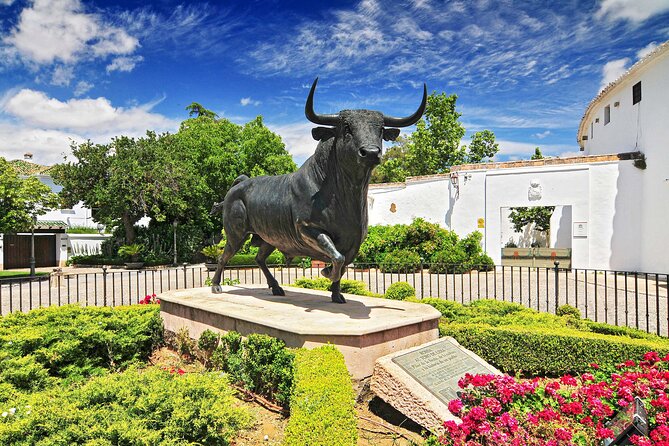
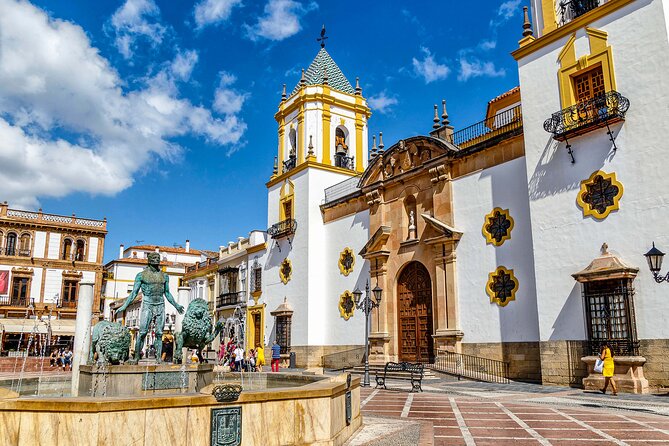
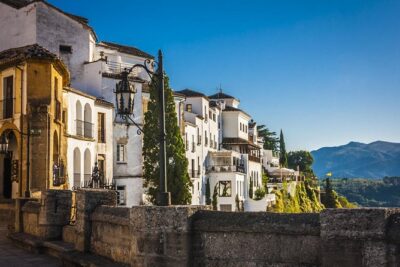
You start at Plaza del Socorro, right in the heart of Ronda’s old town. This is a good choice because the square gives you an easy warm-up, not a hard “jump right into the gorge” moment.
Spend the first few minutes at Iglesia del Socorro and the fountain with Hercules and the Two Lions. Even if you have only a short time here, these details help the rest of the walk click. That fountain is not random decoration, it is a visual shorthand for Andalusian identity and local symbolism.
What I like about starting in a plaza like this is the pacing. You can get oriented, watch people come and go, and then turn the corner toward the viewpoints with your bearings set.
Balcón del Coño and the gorge edge you feel in your stomach
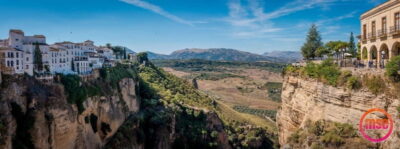
Next up is Balcón del Coño, Ronda’s dramatic viewpoint on the edge of the gorge. The name alone makes you curious, but the real point is the view: you get wide views over the Serranía de Ronda mountains, the valley below, and the iconic bridge that frames the city.
This is the stop where I’d slow down and do two things: first, take photos, then look up and around without the camera. The gorge can look “one-note” in pictures. In person, you notice depth and the way the bridge and river cut through the terrain.
The tour gives you about 10 minutes here. Use most of it. If you treat it like a quick snapshot, you miss why this viewpoint is a signature Ronda moment.
Puente Nuevo: why the New Bridge deserves the hype
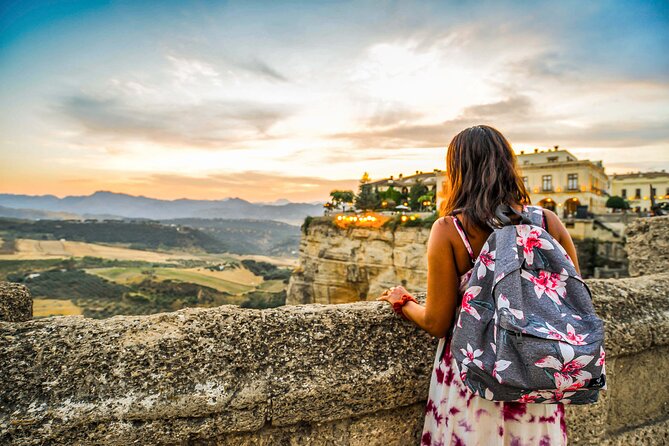
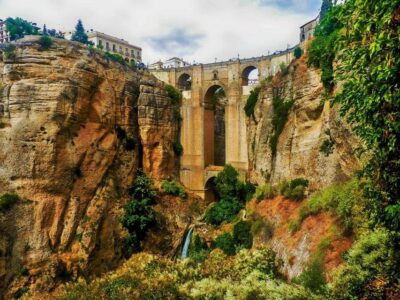
Then you hit Puente Nuevo, the New Bridge, and it delivers exactly what Ronda is famous for. Completed in 1793 after 40 years of construction, it spans the 120-meter-deep El Tajo gorge, connecting the old and newer parts of the city.
In the audio, you learn the bridge is not just impressive because it is tall. It is impressive because it was built over generations, and because its stone design still reads clearly from multiple angles. As you stand nearby, you can spot how the bridge becomes a kind of visual spine for the whole town.
Practical tip: plan your photo strategy. If you want shots that include both the bridge and the gorge depth, spend a minute scanning for the best angle. The tour time is short, but you can still get a solid set of pictures if you do not rush.
Other runs up to Ronda and its gorge:
- Ronda and Setenil Tour with Free Time and Map from Málaga
★ 4.8 · 5,344 reviews - From Málaga: Ronda+Setenil de las Bodegas with Little Train
★ 4.6 · 4,115 reviews - From Malaga: Ronda and Setenil Guided Tour Day Trip
★ 4.5 · 3,072 reviews - From Malaga: Ronda and Setenil de las Bodegas Day Trip
★ 4.6 · 1,552 reviews - From Malaga: Ronda & Setenil de las Bodegas Day Trip
★ 4.8 · 1,004 reviews
Mirador de Aldehuela: engineer-named views with quieter payoff
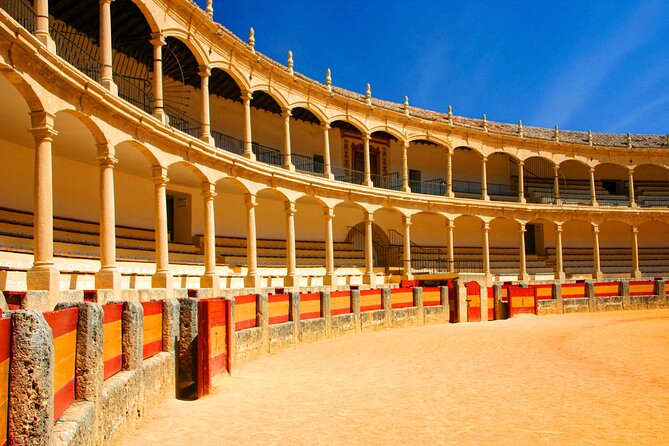
After Puente Nuevo, the route heads to Mirador de Aldehuela, named after engineer José Martín de Aldehuela, who also designed Puente Nuevo. This viewpoint is a different feeling than the bridge itself. You are no longer admiring the structure close-up. You are reading the scenery from above.
You get panoramic views of El Tajo gorge, the Guadalevín River, and the surrounding mountains. It’s a good place to reset after the “wow, the bridge” moment. If you like calm breaks during walking tours, this is one of the better spots to slow your breathing, look for long sight lines, and let your eyes rest.
Again, expect around 10 minutes. For photos, that is enough if you arrive ready and keep your phone battery in mind.
Spain Square and the Royal Cavalry bullring: a stop that ties viewpoints together
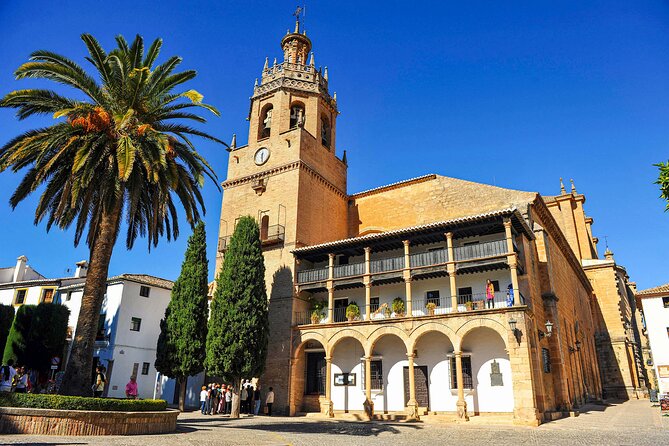
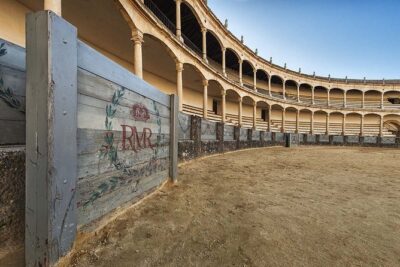
One of the route points brings you to Spain Square (Plaza de España), with the Parador de Ronda and historic buildings around it. The audio also references the Bullring of the Royal Cavalry of Ronda, giving context to why this area matters in daily life, not just in postcard views.
From here, you also get a practical benefit: it acts like a starting hub for understanding the layout of Ronda. You see how squares, cafes, and landmark facades connect, and you can feel why bridges matter. The old town is not isolated architecture, it is a working city that funnels movement between levels.
If you are thinking, do I really need one more square before the next bridge view? My take is yes, because it helps you understand where you are and how you are moving.
Puente Viejo: the older bridge that makes the whole walk make sense
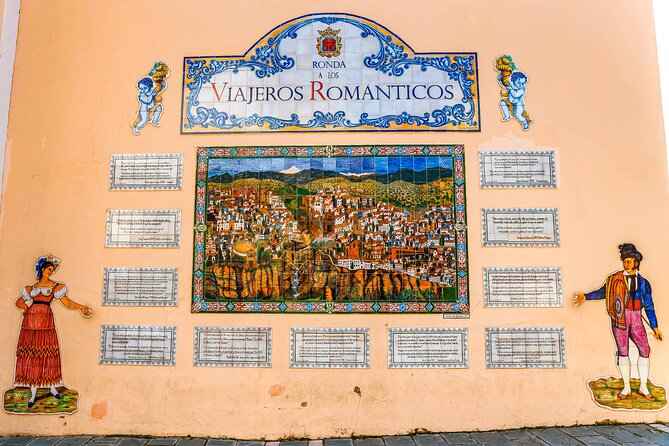
Later, you reach Puente Viejo, the Old Bridge. It dates to the 17th century and also crosses El Tajo gorge, linking Ronda’s older core with the newer parts.
This stop is valuable because it changes your frame. Instead of “the famous new bridge,” you start noticing continuity. You can compare the vibe of old stone arches with the monumental Puente Nuevo experience. Even if you do not analyze architecture like a scholar, the feeling is simple: Ronda has always needed bridges to live well on this terrain.
Use this stop for low-key photos and a final look over the gorge and Guadalevín River. The audio will help you tie the bridges together as part of the city’s logic, not as separate attractions.
Palacio de Mondragón and Santa María la Mayor: Moorish to Christian, visible in stone
Now the walk shifts from pure scenery to architectural layers, and that is where Ronda gets extra interesting.
You’ll pass Mondragon Palace (Palacio de Mondragón), originally tracing back to Moorish times and later shaped by Renaissance and Mudéjar styles. The audio notes it was once residence of Moorish kings and later the Catholic Monarchs, and that it now houses the Municipal Museum. Even if you do not go inside, the palace setting and courtyards give you a sense of how power and culture lived here.
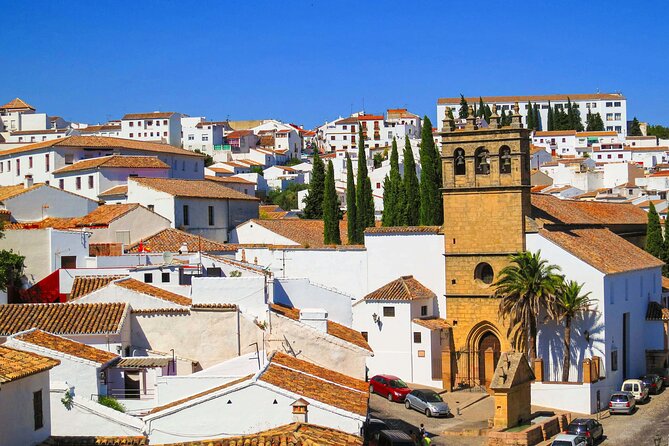
Then you reach Church of Santa María la Mayor. The audio explains it was originally a mosque, transformed into a Christian church after the Reconquista. You get a blend of Gothic, Renaissance, and Baroque elements, plus highlights like the carved altarpiece, columns, and a Mudejar coffered ceiling. The bell tower also offers panoramic views.
This pairing is strong because it gives you cause and effect. You see how the same space can change religion, design language, and meaning over time. If you like history you can actually see, this section is worth giving extra attention.
San Sebastián minaret and Arab Baths: the Moorish thread stays consistent
Ronda’s Islamic heritage shows up again and again on this route, and you can feel the theme rather than treating each stop as a random sight.
You’ll see the Minaret of San Sebastián, described as a well-preserved relic of an ancient mosque tower from the Moorish period, later integrated into a Christian church after the Reconquista. The audio notes intricate brickwork and architectural elegance, which is the kind of detail you might miss if you are just power-walking.
Next is the Arab Baths (Baños Árabes), dated to the 13th and 14th centuries. The audio frames them as one of the best-preserved Moorish bathhouses in Spain and points you toward horseshoe arches, star-shaped skylights, and intricate brickwork. It also includes the practical side of how water heating and steam generation worked.
If you are short on time, the bath stop is still useful because it helps you understand that Moorish design in Ronda was not only about monuments. It included daily life systems like warmth, water, and social space.
Casa del Rey Moro and Puerta de Almocábar: legends, engineering, and a fortified gate
At House of the Moorish King (Casa del Rey Moro), the audio blends myth and architecture. The site is built on ruins of a Moorish palace, and you also get the designed gardens by French architect Jean-Claude Nicolas Forestier. What makes this stop stand out is the mention of the water mine, a labyrinth of steps carved into the rock leading down toward the Guadalevín River. The views back up toward the gorge and Puente Nuevo are part of the experience too.
Then you finish with Puerta de Almocábar, a 13th-century fortified gate from the Moorish period. It is described as an access point to the medieval town, with crenellations and defensive stone construction. If you want a “stop that feels like you are entering the past,” this is it.
These two stops give the ending a satisfying note. You go from the city’s defensive walls and access points to a house and water system designed for survival in a tough terrain.
Lara Museum and Casa Museo Don Bosco: curious detours for when you want more than views
The route also includes museum-style stops that work well for people who want learning without a long sit-down.
The Lara Museum (Museo Lara) is housed in an 18th-century palace and the audio describes eclectic collections, including antique scientific instruments, vintage firearms, clocks, and ethnographic artifacts. There is also a Witchcraft and Inquisition themed exhibit, which signals that this is not a gentle museum tone.
Then you get Casa Museo Don Bosco, an early 20th-century mansion connected to the lifestyle of a wealthy Ronda family. The audio highlights furnished rooms with period details and azulejo tiles, plus gardens with fountains and views of El Tajo gorge and Puente Nuevo. Even when you are moving quickly, these descriptions help you look at what you see in a more specific way.
Since the tour data says the route does not require an entrance fee, treat these as stops where the audio can guide your attention whether you only pass by or you decide to spend extra time on-site.
Pacing the walk: how to fit 90 minutes into real time
The tour is listed at about 1 hour 30 minutes. Many major stops are set to around 10 minutes, which is a good rhythm for a self-guided route: look, listen, take photos, then move on.
Here is how to pace it without feeling rushed:
- Spend a bit longer at Puente Nuevo and Balcón del Coño if photography matters.
- Keep your headphones handy so you do not miss audio while walking between levels.
- If you find yourself wanting more time in one place, let it be the viewpoints, not the navigation parts.
Also note the end detail. The tour description says the experience ends back at the meeting point, but you should plan that the route finish may not line up perfectly with where you parked your car. If you are parking, aim for a spot you can leave even if your final steps are slightly away.
Value check: $6.73 for 21 historian recordings and free-to-follow stops
At $6.73 per person, this is one of the better “low-cost learning” options in Ronda, especially if you like walking and you hate waiting around for group schedules. You are paying for structure plus narration, not for a human guide.
You get:
- 21 audio recordings by a professional historian
- an app with an offline map and route
- illustrations to spot landmarks
- a route built around major Ronda highlights, with no required entry fee for the walk itself
For a first-timer, this can save you mental energy. You know what to look for, you have a logical order, and you do not have to guess which gorge viewpoints are the must-stops. For a second visit, it is a smart way to focus on themes, like the bridge engineering and the Moorish-to-Christian architectural shift.
If you already love audioguides and you travel with a phone and headphones, the value is strong.
Who this self-guided Ronda Old Town tour is best for
This works especially well for you if:
- you want a guided feel without a human group slowing you down
- you like viewpoint-heavy days with short, meaningful stops
- you are comfortable navigating with your phone and want offline support
It may be less ideal if:
- you dislike app setup and want everything to be ready instantly
- you plan to rely on shared headphones or spotty connectivity
- you need a totally “point-to-point” route that ends at the exact same curb as where you started
And since the audio is available in English, it is a straightforward fit for English-speaking visitors who want narration rather than just directions.
Should you book this Ronda Old Town smartphone audio tour?
If your priority is seeing Ronda’s best-known spots, learning why they matter, and keeping costs under control, I think this is a good booking. At $6.73, the combination of 21 historian-narrated recordings, an offline route, and a walk that focuses on major landmarks is hard to beat.
Just do one small prep step: download and activate the app before you leave Plaza del Socorro, and pack your own headphones. After that, you get exactly what Ronda does best, big gorge views, iconic bridges, and layered architecture, all in a format that fits a 90-minute day trip.
FAQ
What is the duration of the Ronda Old Town walking tour with audioguide?
The tour is listed at about 1 hour 30 minutes.
How much does the tour cost?
The price is $6.73 per person.
What language is the audio guide available in?
The audio guide is offered in English.
Do I need an internet connection during the tour?
You get an offline map with the route for GPS navigation, and the audio guide app is designed to work during the experience. You may still want to download everything before you start.
Do I need headphones?
Yes. You must bring your own headphones, since they are not included.
Is there a human guide meeting me at Plaza del Socorro?
No. This is self-guided, and there is no human guide at the meeting point.
Where does the tour start?
It starts at Plaza del Socorro, Pl. del Socorro, 29400 Ronda, Málaga, Spain.
Where does the tour end?
The tour activity ends back at the meeting point area. In practice, your exact parking spot might not match the finish location.
Are there entrance fees included for stops on the route?
No. The tour does not require entrance fee tickets for the route.
What is the cancellation policy?
Free cancellation is available up to 24 hours in advance for a full refund. Canceling within 24 hours does not qualify for a refund.
More Self-Guided Tours in Malaga
- Málaga: Picasso Birthplace Museum Ticket & City Audio Guide
★ 4.1 · 158 reviews - Malaga: Centre Pompidou Malaga Ticket and City Audio Guide
★ 3.4 · 47 reviews - Malaga Historic Centre: Self-guided tour created by Official Guide
★ 4.5 · 26 reviews - Ronda Self-Guided Audio Tour with Andalucia Travel Expert
★ 4.5 · 26 reviews
New arrivals around Malaga
- Malaga: group walking tour★ 5.0 · 1 review
- Andalusian Wine Tasting Tapas and DE wine tastings★ 5.0 · 1 review
- Guided tour of Malaga fishing scene with cooking workshop★ 5.0 · 1 review
- Malaga Moorish & Roman Heritage: Old Town, Alcazaba & Cathedral★ 4.0 · 1 review
- Marbella: Climb La Concha on Private Guided Hiking Trip★ 5.0 · 1 review
- Malaga: Explore Malaga on a Solar Scooter★ 5.0 · 1 review
Ronda Excursions, compared.
Ronda and Setenil Tour with Free Time and Map from Málaga
Read our review →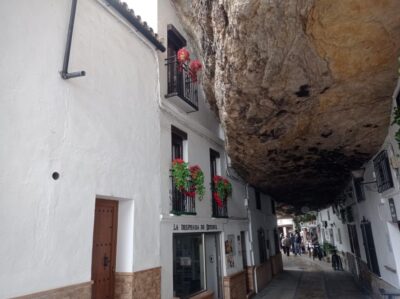
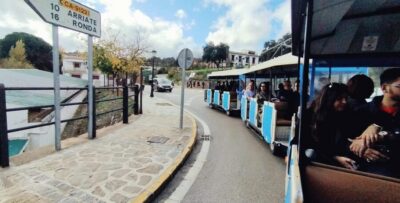
Ronda+Setenil de las Bodegas with Little Train
Read our review →
Ronda and Setenil de las Bodegas tour from Malaga
Read our review →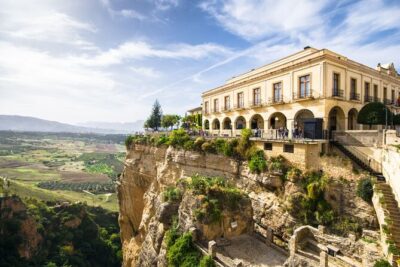
Browse the lists this tour appears in