
Reviewed · ALCAZABA & GIBRALFARO TICKETS
Málaga Private Walking Tour, Roman Theater, and Alcazaba with Tickets
Málaga feels layered fast, if you have the right guide. This private walking tour strings together the city’s big landmarks with tickets included and skip the ticket line access to two of the top sights. You get a tight route through the historic center, plus a local product tasting to make the whole thing feel real.
I like how the pacing stays personal in a private group, so you can ask questions as you go. I also like that the two hardest stops, the Roman Theater and the Alcazaba, come with entry tickets, so you spend your time walking and looking instead of hunting for passes.
One consideration: this is a walk with uneven stone and some stairs near major monuments. It is not set up for wheelchair users or people with mobility impairments, and it is also listed as not suitable for motion sickness.
In This Review
- Key takeaways before you go
- Plaza de la Marina to Calle Larios: getting oriented in Málaga’s core
- Plaza de la Constitución, then La Manquita and the Picasso Museum
- El Pimpi and Church of Santiago: where the tour tastes like Málaga
- Teatro Romano de Málaga: fast access to the Roman Theater
- Alcazaba: tickets included, views handled by the route
- How the guide connects Phoenicians, 19th century industry, and today
- Guide quality and the small private group feel
- Price and value: what $106 buys you in real time
- What to wear, how to pace yourself, and who should skip it
- Ending in Plaza de la Aduana: keep the momentum after the tour
- Should you book this private Málaga walking tour with tickets?
- FAQ
- Where is the meeting point for the tour?
- How long is the Málaga private walking tour?
- Is this tour private or shared?
- Which tickets are included?
- What languages is the tour offered in?
- Is the tour suitable for wheelchair users or limited mobility?
Key takeaways before you go
Skip the ticket line for the Roman Theater and the Alcazaba, so you keep momentum.
Private group format means you can get answers on the spot instead of listening from far away.
Guides with years of experience focus on what you are seeing, not just dates.
A local tasting at El Pimpi turns the historical route into something you can taste.
Photo stops built in for La Manquita and the Picasso Museum, so you still get the highlights without stalling.
You end in the historic core at Plaza de la Aduana, convenient for continuing on your own.
Plaza de la Marina to Calle Larios: getting oriented in Málaga’s core
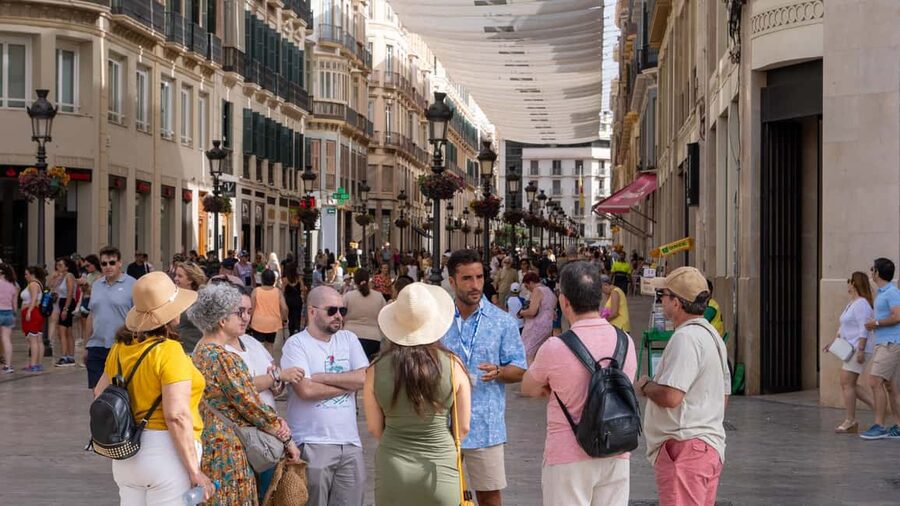
The tour starts at the door of the Tourist Office in Plaza de la Marina. It is a smart place to begin because you are already in the thick of Málaga’s old center, with an easy sense of direction from the start.
From there, you head along Calle Larios, a classic main street route that helps you orient before the narrower historic lanes start taking over. This part is less about a single landmark and more about setting the scene, so later, when you hit the major monuments, they make sense in one connected story.
If you like tours that help you see the city’s layout fast, this opening stretch delivers. If you hate walking early, wear shoes that you can trust for long stretches of stone sidewalks.
More ways up to the Alcazaba and Gibralfaro:


Plaza de la Constitución, then La Manquita and the Picasso Museum
Next comes Plaza de la Constitución, another anchor point in the historic center. The guide uses these plazas to connect what you see now to how Málaga developed over time, which is the whole point of the tour style: you are not just collecting photos, you are building a mental map.
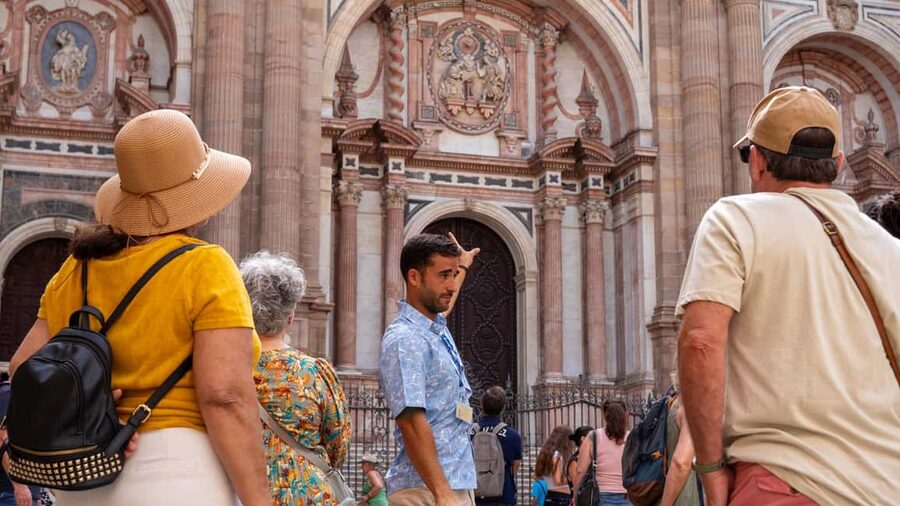
Then you get a photo stop at the Santa Iglesia Catedral Basílica de la Encarnación de Málaga, commonly nicknamed La Manquita. You will also pass by the Picasso Museum for a short photo stop, about 15 minutes. This is not a long museum visit here, so go in expecting a quick highlight, not a full deep dive.
For many people, this is exactly the right mix. You see the big faces of Málaga, and you keep your energy for the heavier hitters later.
For a drawback, just know that if you were hoping to spend serious time inside either the cathedral area or the Picasso Museum, this route does not prioritize that. The tour is designed for breadth in about 2.5 hours.
El Pimpi and Church of Santiago: where the tour tastes like Málaga
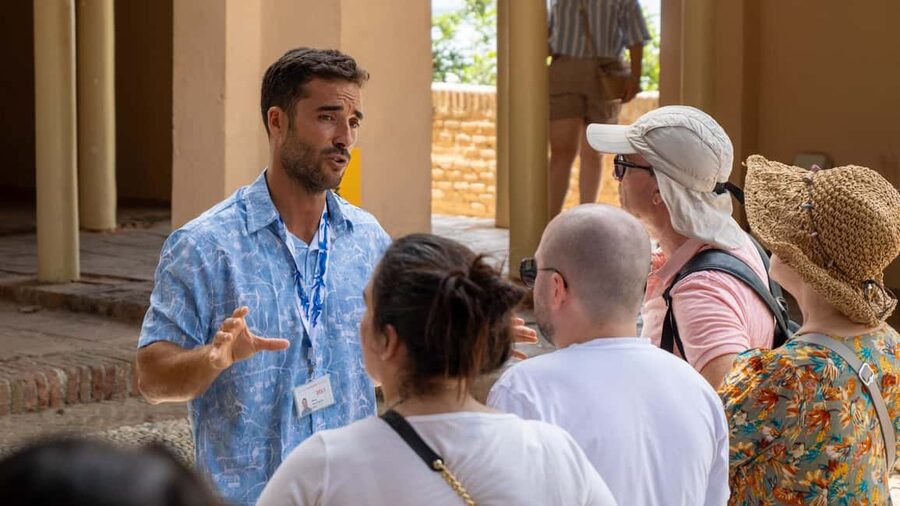
One of the most enjoyable stops is El Pimpi. The tour includes time with a guided visit here, and it is also where the local product tasting fits in. That tasting matters more than you might think, because it gives you a taste of daily Málaga life, not just major monuments.
El Pimpi sits naturally in this historic lane atmosphere, so the stop feels like a break rather than a detour. You can also use this time to reset your brain before the Roman Theater and Alcazaba, which are the parts where the walking ramps up a bit.
After that, you visit the Church of Santiago with guided time. Churches like this often become visual shorthand for periods of change, and a good guide will point out what to look for rather than flooding you with facts.
If you are the type who likes moments that feel local and not just tourist-photo focused, this section is one of the reasons people book this tour.
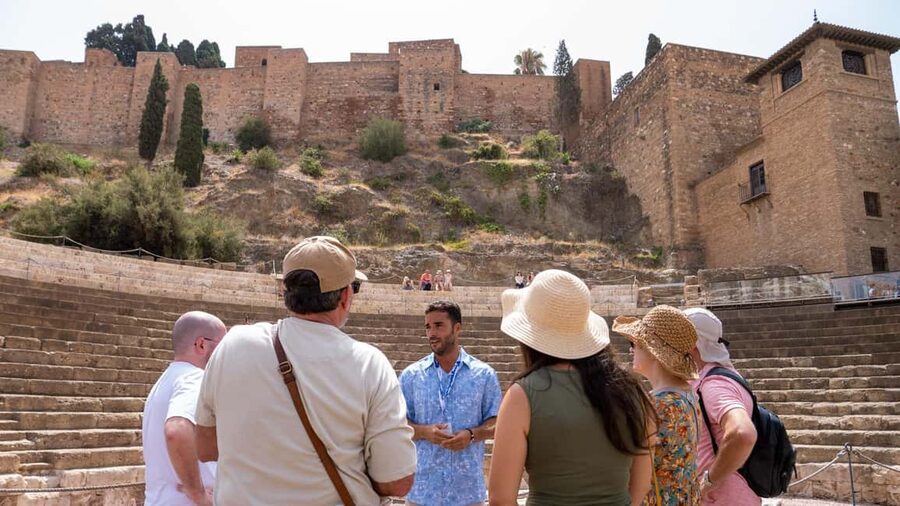
Teatro Romano de Málaga: fast access to the Roman Theater
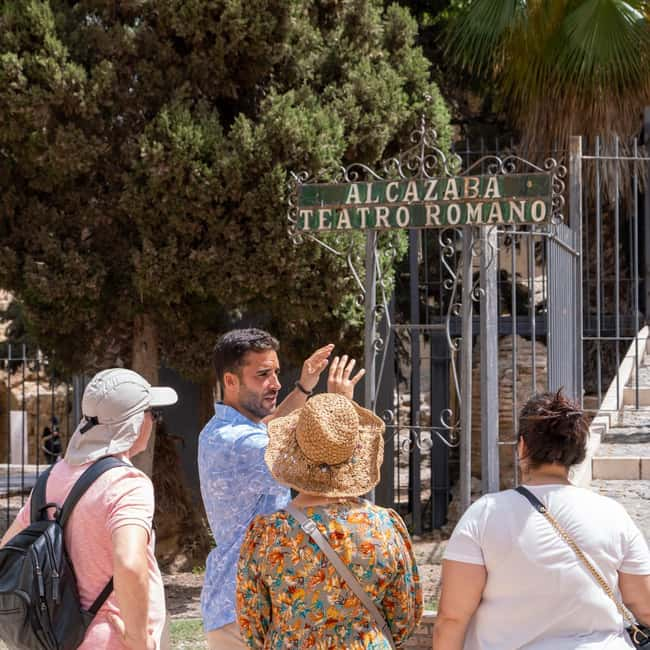
The Roman Theater is one of Málaga’s headline sights, and this tour includes tickets for it. Even better, you skip the ticket line, which is a real time saver when you compare it to arriving on your own during busy hours.
Your time at the Roman Theater is around 15 minutes. That sounds short, but the value here is that the guide helps you look at what you are seeing instead of spending your time figuring out where to stand and what matters.
This is one of those places where the setting does a lot of the talking. The theater is not just a relic, it is part of how Málaga layers its identities: ancient foundations under newer streets and stories.
The small time window is the tradeoff. You will likely leave wanting more time, which is not a bad thing, because it can send you back later on your own with clearer questions.
More of the old centre crossed on foot:
- Malaga Bike Tour – Old Town, Marina & Beach
★ 4.7 · 1,150 reviews - Málaga: 3-Hour Complete Walking Tour with Tickets
★ 4.5 · 976 reviews - Málaga: Cathedral, Alcazaba, Roman Theater Walking Tour
★ 4.7 · 315 reviews - Malaga Private Walking Tour, Alcazaba & Catamaran Cruise
★ 5.0 · 159 reviews - Walking Tour of Malaga’s Historic Center
★ 4.5 · 134 reviews
Alcazaba: tickets included, views handled by the route
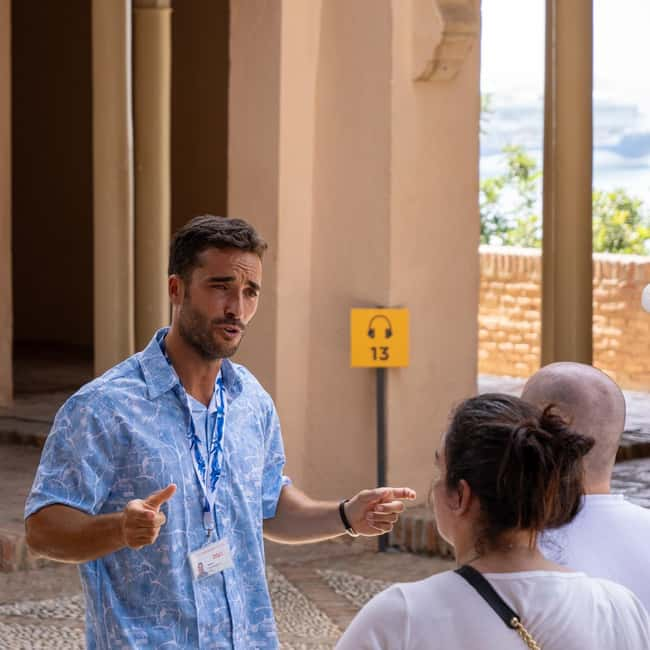
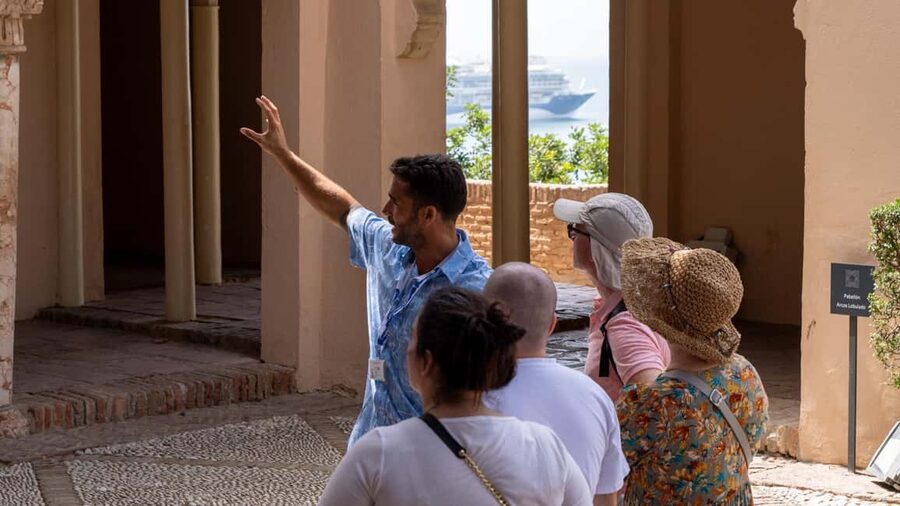
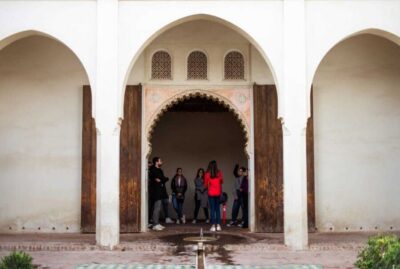
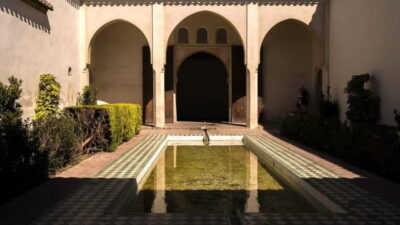
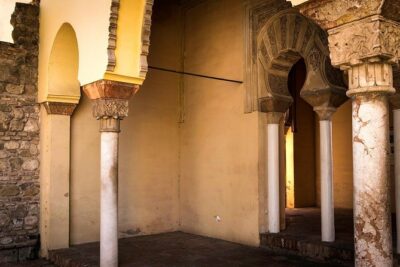
Next up is the Alcazaba of Málaga, another major must-see. Just like the Roman Theater, your tickets are included, and you have skip the line access. That matters because Alcazaba time can be frustrating if you are dealing with queues and last-minute ticket issues.
The tour includes guided time inside, plus a photo stop later in the route. The guide’s storytelling helps you understand the place beyond the wow factor of the walls and views, tying it to Málaga’s long arc of different civilizations.
The Alcazaba is also where the walk becomes more demanding. Even if you are not climbing huge heights, the terrain is real and you are spending time looking outward as much as inward. Bring comfortable shoes, because you will feel it.
If you are someone who prefers slow, unhurried exploring, you might wish you had more than the guided window. But as a first contact with the monument, this tour makes it very efficient.
How the guide connects Phoenicians, 19th century industry, and today
A standout feature is the way the tour organizes Málaga by periods. You are not stuck in one century. The guide connects the city’s founding by the Phoenicians to the Málaga you see now, and then moves you through the major “turning points” that shaped the modern city.
You also hear about powerful 19th century families and how they helped turn Málaga into an industrial powerhouse. That kind of context is useful because it explains why certain neighborhoods and buildings have their specific character. Without the backstory, a lot of old architecture feels like random beauty. With it, it feels like cause and effect.
You will also hear about the kind of change that happens when industries grow, wealth concentrates, and cities reinvent themselves. That is a big reason a good guide can turn a short tour into something that sticks longer than the average sightseeing checklist.
The goal is simple: help you feel like you are walking with a local in your ear, not like you are being dragged through stops. The private group format makes that easier.
Guide quality and the small private group feel
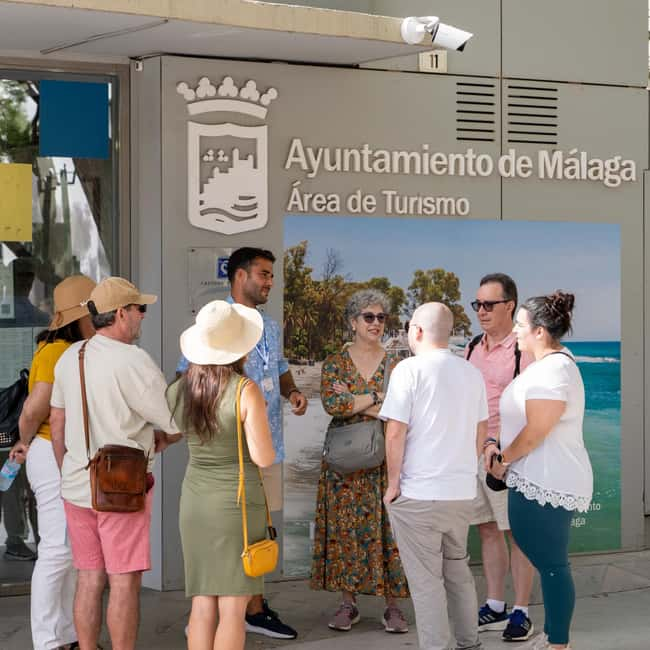
The most praised part of the experience is the guide. People consistently highlight guides who explain clearly, take time, and answer questions. One guide name that shows up in the feedback is Nanuel, and he is described as patient and able to compress a lot of information into the 2.5 hour time frame.
That is the right skill set for this route. You want someone who can manage flow. You also want someone who can read the group mood, slow down when questions pop up, and speed up when everyone is clearly ready to move on.
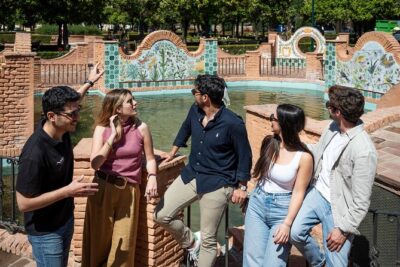
The private group also helps. Even if you are not a small family group, it feels intimate because you are not sharing the guide with dozens of people. You can ask a question, point at a detail, and get an answer that makes your next stop easier to understand.
If you care about the human side of travel, this is a tour where you will likely feel the difference.
Price and value: what $106 buys you in real time
At $106 per person for a 2.5 hour private tour, you are paying for three things at once: an official guide, entry tickets to the Alcazaba and the Roman Theater, and skip the ticket line access. You are also paying for a tasting and a tight routing through major central sights.
That is the value story. If you tried to recreate this alone, you would need to buy tickets for two major monuments, plan the route yourself, and still deal with lines at the stops that tend to get crowded. Here, those friction points are handled for you.
Is it the cheapest way to see these sites? No. But it is often good value if you want your time to feel intentional and if you prefer not to spend your vacation energy on logistics.
For budgeting, think of this as a guided “best of Málaga core” session. You are not just buying access. You are buying someone to translate what you see so it feels less like separate attractions and more like one connected city story.
What to wear, how to pace yourself, and who should skip it
This tour asks for comfortable shoes. That is not just a generic line. The historic center involves uneven surfaces and you are moving between several key areas without long breaks.
It is also not allowed for pets. The tour is listed as not suitable for people with mobility impairments, wheelchair users, people with motion sickness, and people over 95 years old. If any of those apply, you will be happier choosing a different tour format built for your needs.
For the rest of you, the main self check is simple: can you comfortably walk for about 2.5 hours with monument stops? If yes, you should enjoy it a lot.
A practical tip: keep water handy if you usually get thirsty during walking tours. The tour itself includes a tasting, but you will still want your own hydration.
Ending in Plaza de la Aduana: keep the momentum after the tour
The tour wraps up in the heart of Málaga’s historic center at Plaza de la Aduana. That is a useful finish because it puts you back in a central area where you can keep exploring on your own without backtracking.
At that point, you will have seen the big pieces: central streets, key churches and squares, the Roman Theater, and the Alcazaba. Even if you come back later for a longer look, you will now know what you are looking at.
Should you book this private Málaga walking tour with tickets?
Book it if you want a structured way to see Málaga’s top historic sights in one go, without spending time figuring out tickets or waiting in line. It is especially worth it if you like guides who explain clearly and you want a small private group experience.
Skip it if you need wheelchair access, have mobility limitations, or get motion sick easily. Also skip it if you want a long museum experience, because the Picasso Museum stop here is brief and framed as a photo stop.
If your goal is a fast, high value taste of Málaga’s layers, this tour is a strong choice. You get the monuments that people come for, plus the connective tissue that makes the city feel understandable instead of just photographed.
FAQ
Where is the meeting point for the tour?
You meet at the door of the Tourist Office in Málaga, at Plaza de la Marina.
How long is the Málaga private walking tour?
The tour duration is 2.5 hours.
Is this tour private or shared?
It is a private group tour.
Which tickets are included?
Tickets to the Alcazaba and the Roman Theater are included, and you skip the ticket line for these sites.
What languages is the tour offered in?
The live tour guide is available in English and Spanish.
Is the tour suitable for wheelchair users or limited mobility?
No. The tour is listed as not suitable for people with mobility impairments and wheelchair users.
New arrivals around Malaga
- Malaga: group walking tour★ 5.0 · 1 review
- Andalusian Wine Tasting Tapas and DE wine tastings★ 5.0 · 1 review
- Guided tour of Malaga fishing scene with cooking workshop★ 5.0 · 1 review
- Malaga Moorish & Roman Heritage: Old Town, Alcazaba & Cathedral★ 4.0 · 1 review
- Marbella: Climb La Concha on Private Guided Hiking Trip★ 5.0 · 1 review
- Private Transfer from Malaga airport (AGP) to Fuengirola★ 5.0 · 1 review
Alcazaba & Gibralfaro Tickets, compared.
Alcazaba and Roman Theatre Guided Tour With Entry
Read our review →
Malaga Tour with Cathedral, Alcazaba and Roman Theatre
Read our review →
Segway Tour in Málaga: Gibralfaro Castle Port & Bullring
Read our review →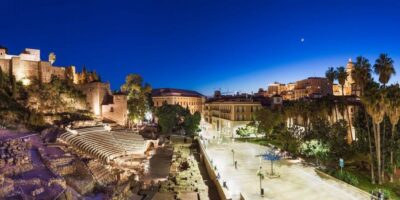
Cathedral, Alcazaba, Roman Theater Walking Tour
Read our review →
Malaga Private Walking Tour, Alcazaba & Catamaran Cruise
Read our review →Browse the lists this tour appears in